
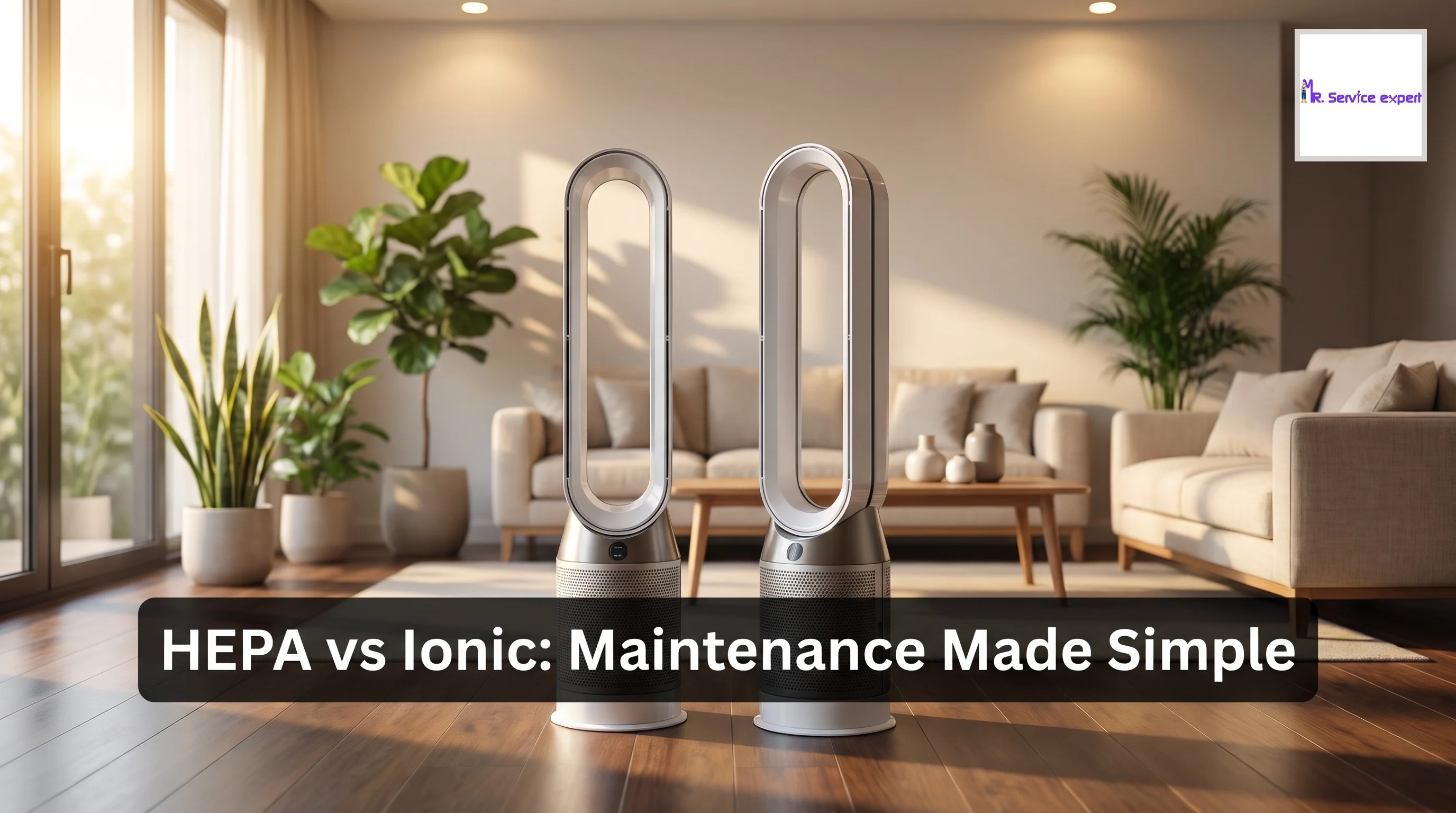
HEPA vs Ionic Air Purifiers: Which Needs Less Maintenance?
Walking into your home after a long day should feel refreshing, but if you're constantly sneezing or noticing dust settling everywhere, your indoor air quality might need serious attention. With pollution levels rising across Indian cities and allergens becoming a year-round concern, air purifiers have become essential household appliances. But here's the million-rupee question that most buyers grapple with: should you invest in a HEPA air purifier or an ionic air purifier, and more importantly, which one will save you time and money on maintenance?
The truth is, maintenance requirements can make or break your air purifier experience. Nobody wants an appliance that demands constant attention or burns a hole in their pocket with frequent filter replacements. Understanding the air purifier comparison between these two popular technologies isn't just about cleaning efficiency—it's about finding a solution that fits seamlessly into your lifestyle without adding to your monthly chores or expenses.
Both HEPA and ionic technologies have their loyal followers, and each comes with distinct maintenance profiles. While HEPA systems rely on physical filtration through dense filters that trap particles, ionic purifiers use electrical charges to remove contaminants from the air. This fundamental difference in how they work directly impacts how often you'll need to service them, what kind of upkeep they require, and ultimately, which technology proves more convenient for busy Indian households.
Before you commit thousands of rupees to an air purifier, knowing the real maintenance story becomes crucial. Are you prepared for regular filter changes, or would you prefer a low-touch solution? Do you have easy access to an air purifier service near me when things go wrong? These practical considerations matter just as much as purification performance when choosing your ideal air purifier.
In this comprehensive guide, we'll dive deep into the maintenance requirements of both technologies, compare their long-term costs, and help you make an informed decision that suits your home, budget, and lifestyle. Whether you're a first-time buyer or looking to upgrade your current system, understanding these maintenance differences will save you from future frustration and unexpected expenses.
Understanding HEPA Air Purifier Technology and Maintenance Needs
HEPA stands for High-Efficiency Particulate Air, and these filters represent the gold standard in mechanical air filtration. A true HEPA air purifier can capture 99.97% of particles as small as 0.3 microns, including dust, pollen, pet dander, mold spores, and even some bacteria. The technology works through a dense mat of randomly arranged fibers that trap particles through various mechanisms including interception, impaction, and diffusion.
The maintenance requirements for HEPA systems center primarily around filter replacement. Most HEPA filters in Indian conditions need replacement every 6 to 12 months, depending on your local air quality and usage patterns. In cities like Delhi, Mumbai, or Bangalore where pollution levels spike during certain seasons, you might find yourself replacing filters more frequently. The filter itself cannot be washed or cleaned—once it's saturated with particles, replacement is the only option.
Beyond the HEPA filter, most units also include pre-filters that capture larger particles like hair and visible dust. These pre-filters are typically washable and should be cleaned every 2-4 weeks for optimal performance. Some models also incorporate activated carbon filters for odor removal, which need replacement every 3-6 months. This multi-stage filtration approach means you're juggling multiple components with different replacement schedules.
The actual replacement process for a HEPA filter is straightforward—most units feature easy-access panels that allow you to swap filters in minutes without needing an air purifier technician. However, the recurring cost adds up. Genuine HEPA filters in India typically range from Rs 1,500 to Rs 5,000 per replacement, depending on the model and brand. Over a five-year period, you could easily spend Rs 15,000 to Rs 30,000 just on filter replacements.
Physical maintenance beyond filters is minimal. You should wipe down the exterior monthly, vacuum the air intake and outlet grills to prevent dust buildup, and occasionally check that the fan motor runs smoothly. Most HEPA systems include filter replacement indicators that alert you when maintenance is due, taking the guesswork out of timing. The technology itself is proven and reliable, with motors and electronic components typically lasting many years without needing air purifier servicing.
How Ionic Air Purifiers Work and Their Maintenance Profile
An ionic air purifier operates on completely different principles, using electricity to charge air molecules rather than physically trapping particles. These devices generate negative ions that attach to airborne particles, giving them a negative charge. These newly charged particles then either stick to positively charged collection plates inside the unit or settle onto nearby surfaces like walls and furniture due to static attraction.
The standout feature of ionic purifiers from a maintenance perspective is their filter-free operation. Since they don't rely on physical filters to trap particles, you eliminate the ongoing cost and hassle of filter replacements entirely. This makes them incredibly attractive for people who want a set-it-and-forget-it solution without recurring expenses eating into their household budget.
However, filterless doesn't mean maintenance-free. Ionic air purifiers require regular cleaning of their collection plates, which accumulate the charged particles over time. Depending on your air quality, these plates typically need wiping down every 1-2 weeks. The process is simple—most plates are removable and can be washed with warm soapy water or wiped with a damp cloth. Unlike HEPA filters that go in the trash, cleaned collection plates go right back into the unit.
Some ionic models produce trace amounts of ozone as a byproduct of the ionization process. While modern units are designed to keep ozone at safe levels, you should periodically ensure your purifier meets safety standards and isn't producing excessive ozone. This isn't really maintenance per se, but it's an awareness factor that HEPA users don't need to consider.
The longevity of ionic purifiers can be impressive since there are fewer components to wear out. The ion generator itself typically lasts for thousands of hours, and with no fan or motor in some models, mechanical failure points are minimized. When something does go wrong, you'll likely need professional air purifier repair since the electronic components require specialized knowledge unlike the simple filter swaps of HEPA systems.
Energy consumption for ionic purifiers is generally lower than HEPA systems since they don't need powerful fans to push air through dense filters. This translates to slightly lower electricity bills over time, though the difference might only amount to a few hundred rupees annually. The real maintenance advantage lies in avoiding those expensive filter replacement cycles that HEPA owners face repeatedly.
Direct Air Purifier Comparison: Maintenance Time and Effort
When comparing the hands-on time required for maintenance, ionic air purifiers have a clear edge in terms of frequency but a different type of involvement. With an ionic purifier, you're committing to quick cleaning sessions every week or two—wiping down collection plates takes perhaps 10-15 minutes each time. This means you're actively maintaining your unit roughly 20-25 times per year, but each session is brief and doesn't cost anything beyond your time.
HEPA air purifier maintenance, by contrast, is less frequent but more involved in terms of planning and expense. You might only deal with major maintenance 2-4 times per year when replacing filters, but each instance requires purchasing replacement filters in advance, ensuring you have the correct model, and budgeting for the cost. The pre-filter cleaning adds another touchpoint every few weeks, similar to ionic maintenance but typically even quicker.
For busy professionals or families, the question becomes whether you prefer regular small tasks or occasional larger ones. Some people appreciate the weekly rhythm of wiping collection plates—it becomes part of their Sunday cleaning routine. Others prefer the HEPA approach where they only think about their air purifier a few times yearly, even if it means spending money when they do.
Accessibility matters too. In smaller Indian homes where space is premium, reaching the air purifier for weekly maintenance might be inconvenient if it's tucked into a corner or mounted on a wall. HEPA units that only need attention quarterly can be placed more permanently without worrying about constant access for cleaning. Consider your home layout and where you'll actually position the purifier when evaluating maintenance convenience.
One often-overlooked factor is the mess generated during maintenance. Replacing a HEPA filter that's been capturing Delhi's pollution for six months means handling a filthy component covered in accumulated dust and particles. Even with careful removal, some debris inevitably escapes. Ionic plate cleaning is generally tidier—you're just washing smooth plates that you can easily rinse in a sink without creating dust clouds.
Travel and vacation considerations also differ between technologies. If you're away from home for extended periods, a HEPA purifier can run unattended for months without needing attention. An ionic unit's collection plates will accumulate more buildup, potentially reducing efficiency until you return to clean them. This makes HEPA systems more suitable for people with irregular schedules or those who travel frequently for work.
Long-Term Cost Analysis: Which Technology Saves Money
Breaking down the five-year cost of ownership reveals significant differences between these technologies. Let's assume you purchase a mid-range unit of either type for around Rs 15,000 initially. For a HEPA air purifier, you'll need to budget for filter replacements twice annually at approximately Rs 2,500 per replacement, totaling Rs 5,000 yearly or Rs 25,000 over five years just for consumables.
An ionic air purifier eliminates those filter costs entirely, potentially saving you Rs 25,000 over the same period. However, this calculation assumes the ionic unit requires no repairs or part replacements. In reality, electronic components might occasionally fail, especially with power fluctuations common in many Indian cities. A single repair visit involving an air purifier technician could cost Rs 1,500 to Rs 3,000, depending on the issue and your location.
Energy consumption differences, while modest, favor ionic technology. A typical HEPA unit draws 40-60 watts continuously, while ionic purifiers might use only 10-20 watts. Over a year of continuous operation, this could mean electricity bills of Rs 1,400 for HEPA versus Rs 350 for ionic, based on average Indian electricity rates. Over five years, that's an additional Rs 5,000 advantage for ionic systems.
Pre-filter cleaning for HEPA units is free if you wash them yourself, but some people prefer buying replacement pre-filters for convenience. If you purchase new pre-filters quarterly at Rs 500 each, that's another Rs 10,000 over five years. This optional expense highlights how even "minor" consumables can accumulate into significant costs when you're not paying attention.
Don't forget the hidden cost of your own time. If you value your time at even a modest Rs 200 per hour, those 20 yearly cleaning sessions for ionic plates represent Rs 4,000 annually in time costs, or Rs 20,000 over five years. Suddenly, the filter-free advantage looks less impressive when you account for the labor you're personally providing. HEPA maintenance, at just 4 hours yearly, would only cost Rs 4,000 over five years by this calculation.
The real wildcard is product longevity and major repairs. HEPA systems with their mechanical fans and motors might need bearing replacement or motor servicing after 3-5 years, potentially costing Rs 3,000 to Rs 6,000. Ionic units with fewer moving parts might avoid this, but when electronic components fail, repairs can be equally expensive and sometimes require complete board replacements that approach the cost of a new unit.
Performance Impact of Maintenance Schedules
Here's something many buyers overlook: maintenance frequency directly affects purification performance, and the two technologies respond differently to neglect. A HEPA air purifier with a saturated filter doesn't just work less effectively—it can actually restrict airflow to the point where the unit barely circulates air. You'll notice increased noise as the motor works harder to pull air through the clogged filter, and your room coverage drops significantly.
Most quality HEPA units include sensors that detect filter saturation and alert you when replacement is overdue. Ignoring these warnings gradually transforms your purifier into an expensive decorative item. The good news is that performance degradation is predictable and replacement immediately restores full function. There's no gradual decline between replacements—it's more like a binary on/off switch for efficiency.
Ionic air purifiers experience a more gradual performance decline as collection plates fill with particles. Unlike HEPA filters that eventually choke airflow, dirty ionic plates simply capture fewer new particles because their surface is already occupied. The unit keeps running normally, but you might notice dust accumulating faster on surfaces or allergies returning. This subtle degradation means you might not realize your purifier needs cleaning until air quality has noticeably declined.
The advantage of ionic gradual decline is that missing a cleaning session by a week or two doesn't cause catastrophic performance loss. With HEPA systems, once that filter is saturated, you're basically running a fan with no purification benefit. This makes ionic technology more forgiving if you occasionally forget maintenance, though consistent neglect will eventually render either technology ineffective.
Seasonal considerations in India dramatically impact maintenance schedules. During Diwali when firecracker smoke fills the air, or during crop burning season affecting northern states, both technologies face heavy particle loads. HEPA filters might need replacement every 3-4 months instead of 6-12 during these periods, significantly increasing costs. Ionic plates require more frequent cleaning, perhaps weekly instead of bi-weekly, but without additional expense beyond your time.
If you're someone who struggles with routine maintenance, HEPA systems with their filter replacement indicators and dramatic performance loss when overdue might actually keep you more accountable. Ionic purifiers, with their gentle performance degradation and need for self-motivated regular cleaning, might suffer from procrastination. Knowing yourself and your habits should influence which technology you choose.
Practical Considerations for Indian Households
Indian home conditions present unique challenges that affect maintenance requirements for both technologies. High humidity in coastal cities like Mumbai or Chennai can promote mold growth on HEPA filters if the purifier isn't run continuously, potentially requiring more frequent replacement. In contrast, ionic purifiers don't provide a moist surface for mold growth, giving them an advantage in humid climates from a maintenance perspective.
Power fluctuations and outages common in many Indian cities can damage the electronic components in ionic purifiers, potentially requiring air purifier repair more frequently than in countries with stable electricity. HEPA systems with their simpler mechanical operation might prove more resilient to power issues, though their motors can still suffer from voltage spikes. Using a stabilizer adds cost but protects both technologies.
Access to replacement parts varies significantly across India. In metro cities, finding an air purifier service near me is relatively easy, with multiple service centers and readily available HEPA filters for popular models. In tier-2 and tier-3 cities, you might struggle to source specific filter models, sometimes forcing you to order online and wait days for delivery. Ionic purifiers with no consumable filters avoid this geographic disadvantage entirely.
The DIY maintenance culture in Indian households often extends to air purifiers. Many people attempt to vacuum or wash HEPA filters to extend their life, though manufacturers warn against this practice as it damages the filter structure and reduces efficiency. Ionic collection plates, being designed for washing, align better with the Indian tendency to maintain rather than replace components whenever possible.
Hard water in many Indian cities creates another consideration when cleaning ionic collection plates. Mineral deposits from tap water can build up on plates over time, potentially requiring occasional descaling with vinegar solutions. Using filtered or distilled water for cleaning adds a minor inconvenience but ensures plates remain effective longer.
Discover how maintenance requirements impact your air purifier's long-term performance and costs. Learn more about filter replacement schedules, cleaning protocols, and hidden upkeep expenses that differ dramatically between HEPA and ionic technologies. Explore further to understand which system aligns with your lifestyle and budget constraints over the next five years of operation.