
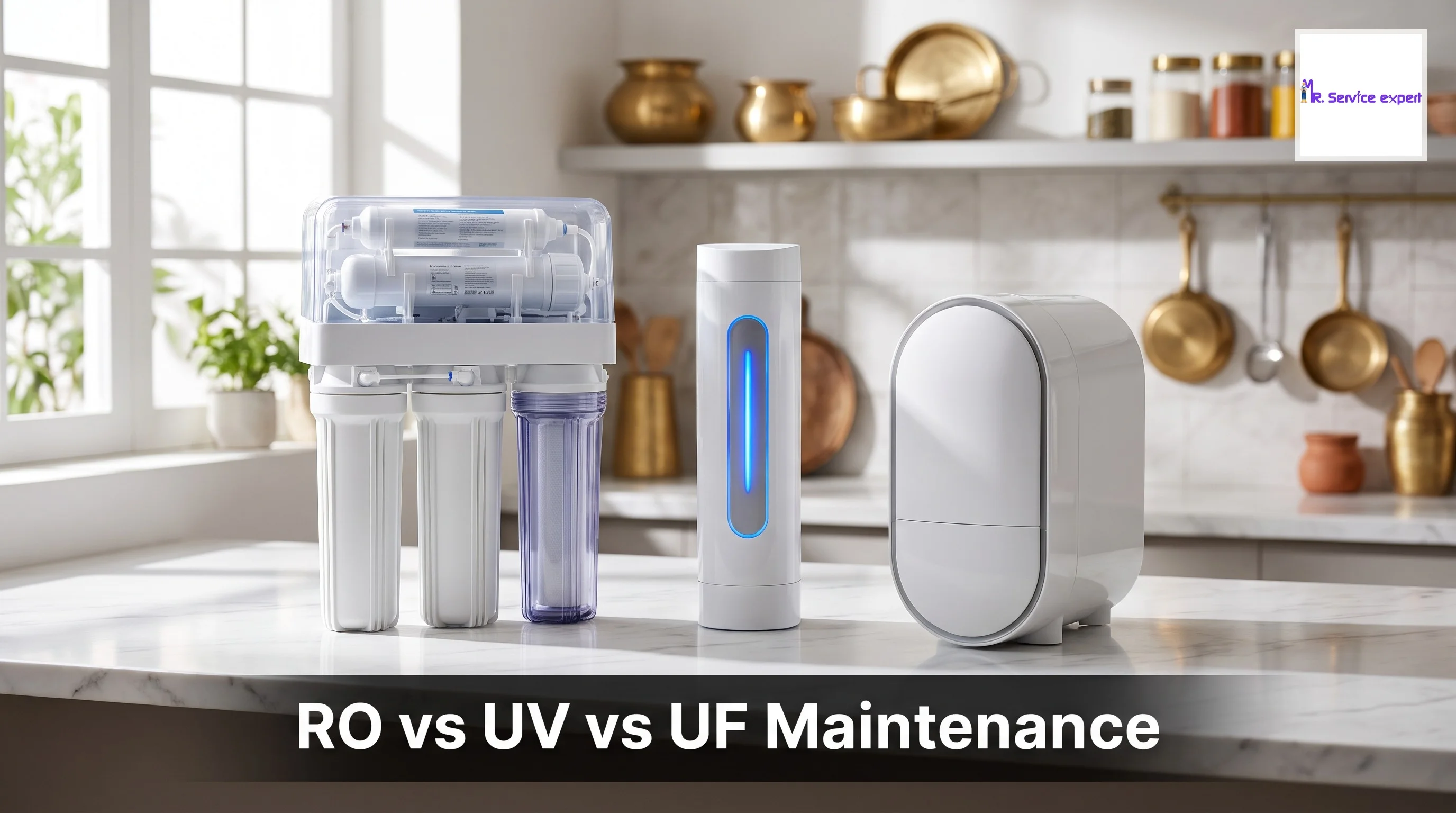
RO vs UV vs UF Purifier: Which Needs Less Maintenance?
Choosing the right water purifier for your home is not just about clean drinking water—it is about finding a system that fits your lifestyle and budget in the long run. Many Indian households face the challenge of maintaining their water purifiers, often discovering that the real cost kicks in after installation. If you are constantly calling a technician or replacing filters more frequently than expected, you understand the frustration. The debate around which purification technology requires the least upkeep has become increasingly important as families look to minimize both expenses and hassle.
Water quality varies dramatically across India. Homes in Mumbai, Delhi, Bangalore, and Chennai deal with different contamination levels, hardness, and total dissolved solids. These factors directly impact how often your purifier needs servicing. While some systems can function for months with minimal intervention, others demand regular attention every few weeks. Understanding maintenance requirements before purchase can save you thousands of rupees annually and countless hours of inconvenience.
The three most popular purification technologies—reverse osmosis, ultraviolet, and ultrafiltration—each come with distinct maintenance profiles. RO systems are known for thorough purification but require more frequent servicing. UV purifiers offer simplicity but have specific limitations. UF technology sits somewhere in between, providing a middle ground for many households. The best water purifier for hard water depends not just on purification capability but also on how much time and money you are willing to invest in upkeep.
Modern Indian consumers are increasingly aware that the initial purchase price represents only a fraction of the total ownership cost. Regular water purifier service, replacement parts, membrane changes, and technician visits add up significantly over three to five years. Some families spend more on maintenance than the original purifier cost within just two years of ownership. This reality makes understanding maintenance needs absolutely crucial before making your purchase decision.
This comprehensive guide breaks down exactly what maintenance each technology requires, compares actual costs you can expect in Indian conditions, and helps you determine which system aligns with your water quality, budget, and maintenance tolerance. Whether you live in an area with hard water, high TDS, or bacterial contamination, you will find actionable insights to make an informed choice.
Understanding RO Water Purifier Maintenance Requirements
Reverse osmosis purifiers are incredibly effective at removing dissolved solids, heavy metals, and contaminants, making them the best water purifier for hard water conditions. However, this effectiveness comes with the most demanding maintenance schedule among the three technologies. RO systems use multiple filtration stages, each requiring attention at different intervals throughout the year.
The pre-filter stage typically needs replacement every six to eight months. This sediment filter catches larger particles, rust, and mud before water reaches the delicate RO membrane. If you live in areas with poor municipal supply or rely on borewell water, this filter clogs faster and may need changing every four to five months. The carbon filter, which removes chlorine and organic compounds, usually lasts six to twelve months depending on water quality and daily consumption.
The heart of any RO system is its semi-permeable membrane, which requires the most significant maintenance investment. This membrane typically needs replacement every twelve to eighteen months in normal conditions. However, in areas with extremely hard water or high TDS levels above 1500 ppm, the membrane lifespan reduces to eight to ten months. Each membrane replacement costs between 1500 and 3500 rupees depending on the brand and capacity. This single component significantly impacts RO maintenance cost over the purifier's lifetime.
Post-carbon filters and mineralizer cartridges add another layer of maintenance. These components enhance taste and add back essential minerals removed during the RO process. They need replacement every eight to twelve months, costing between 400 and 1200 rupees each time. Additionally, RO systems require periodic cleaning to remove scale buildup. Professional RO vs UV vs UF system sanitization is recommended every six months, costing between 800 and 1500 rupees per visit.
The storage tank also demands attention. Stagnant water in tanks can develop bacterial growth if not cleaned regularly. Many experts recommend tank cleaning every three months, though some modern systems with UV protection in the tank reduce this frequency. The water rejection ratio of RO systems means more waste water, which can accelerate wear on internal components, further increasing maintenance frequency.
UV Purifier Maintenance: The Low-Maintenance Option
Ultraviolet water purifiers operate on a fundamentally different principle, using UV light to deactivate bacteria, viruses, and other microorganisms. This technology offers the lowest maintenance requirements among the three options, making it attractive for households seeking hassle-free operation. UV systems work best when incoming water already has low TDS and is relatively clear.
The primary maintenance component in UV purifiers is the UV lamp itself. This lamp needs replacement approximately once every year, though some high-quality lamps can last up to 9000 hours of continuous operation. The cost of UV lamp replacement ranges from 800 to 2000 rupees depending on the wattage and brand. Unlike RO membranes that gradually lose efficiency, UV lamps can fail suddenly, so timely replacement is essential to maintain water safety.
Pre-filters in UV systems require attention every four to six months. Since UV technology does not remove dissolved solids or improve water clarity, the pre-filter plays a crucial role in removing sediment that could reduce UV effectiveness. These filters are relatively inexpensive, costing between 200 and 500 rupees for replacement. The simplicity of this setup means fewer components to monitor and replace.
The quartz sleeve protecting the UV lamp accumulates mineral deposits and needs cleaning every three to four months. This cleaning process is straightforward and many homeowners perform it themselves without calling a technician. Professional water purification service for UV systems typically costs between 400 and 800 rupees and is recommended annually rather than biannually. This represents significant savings compared to RO systems.
UV purifiers do not waste water like RO systems, meaning less stress on internal components. There are no membranes to replace, no storage tanks requiring cleaning, and no complex multi-stage filtration. The electrical consumption is also minimal, adding only 50 to 100 rupees to monthly electricity bills. However, UV technology has limitations—it does not remove dissolved salts, heavy metals, or improve taste in hard water conditions.
UF Water Purifier Maintenance Profile
Ultrafiltration technology uses hollow fiber membranes with pore sizes that physically block bacteria, cysts, and suspended particles while allowing dissolved salts to pass through. UF purifiers occupy the middle ground between RO and UV in terms of both purification capability and maintenance requirements. This technology works well for households with relatively good water quality that needs pathogen removal without altering mineral content.
The UF membrane is the central component requiring periodic attention. Unlike RO membranes that need replacement, UF membranes can be backwashed and cleaned to restore performance. This backwashing process, done every two to three months, removes accumulated contaminants and extends membrane life significantly. Many modern UF systems include automatic backwashing features that perform this maintenance without user intervention.
Complete UF membrane replacement becomes necessary only after two to three years of operation under normal conditions. When replacement is needed, costs range from 1000 to 2500 rupees—less than RO membranes and with longer intervals between changes. This extended lifespan contributes to lower overall maintenance expenses.
Pre-filters and sediment filters in UF systems need replacement every six to eight months, similar to other technologies. These filters cost between 250 and 600 rupees each. Some advanced UF systems incorporate carbon filters to improve taste and odor, which adds another maintenance point every eight to twelve months at 400 to 800 rupees per replacement.
Professional water purifier servicing for UF purifiers is recommended annually, costing between 500 and 1000 rupees per visit. The service includes checking the membrane condition, cleaning the system, testing flow rates, and replacing pre-filters. Because UF systems do not use electricity, there are no UV lamps or electrical components requiring attention, reducing potential failure points.
Comparing Maintenance Costs: Real Numbers for Indian Households
Understanding the actual financial impact of maintenance helps in making informed decisions. Here is a detailed comparison of annual maintenance costs for each technology based on typical Indian household usage of 15 to 20 liters daily.
| Technology | Annual Filter Replacement | Membrane/Lamp Replacement | Professional Service | Total Annual Cost |
|---|---|---|---|---|
| RO System | 2400-4000 | 1500-3500 | 1600-3000 | 5500-10500 |
| UV System | 800-1500 | 800-2000 | 400-800 | 2000-4300 |
| UF System | 1000-2000 | 500-850 (prorated) | 500-1000 | 2000-3850 |
These figures represent typical scenarios in Indian conditions. Areas with extremely hard water or high contamination levels will see higher costs, particularly for RO systems. The RO maintenance cost can easily exceed 12000 rupees annually in challenging water conditions requiring more frequent membrane changes and additional servicing.
Over a five-year period, the total maintenance investment becomes even more striking. An RO system might cost between 27500 and 52500 rupees in maintenance alone. A UV purifier would require 10000 to 21500 rupees, while UF systems fall in the 10000 to 19250 rupees range. These long-term costs often exceed the initial purchase price of budget and mid-range purifiers.
Labor costs for technician visits add another dimension. Many households struggle to find reliable ro repair service when needed. Emergency calls for breakdowns or malfunctions can cost an additional 500 to 1000 rupees beyond regular maintenance visits. Ro water purifier technician availability varies significantly across cities and neighborhoods, with some areas requiring advance booking of several days.
Which Technology Suits Different Water Conditions
Selecting the appropriate purification technology based on your specific water quality is essential for minimizing maintenance while ensuring safe drinking water. Testing your water supply helps identify contamination types and guides your choice.
For hard water with high TDS levels above 500 ppm, RO purification remains necessary despite higher maintenance demands. Areas like Delhi, Pune, Jaipur, and many parts of Gujarat face severe hardness issues where only RO effectively reduces dissolved salts and minerals. The best water purifier for hard water incorporates RO technology, though choosing models with pre-treatment stages can extend membrane life and reduce maintenance frequency.
Soft water with low TDS but microbiological contamination suits UV purification perfectly. Cities with treated municipal water supply like parts of Mumbai, Kolkata, and southern Kerala often have acceptable TDS but potential bacterial issues during monsoons. UV systems provide adequate protection with minimal upkeep in these conditions. Adding a simple sediment filter enhances protection without significantly increasing maintenance.
Moderately hard water with TDS between 200 and 500 ppm and bacterial concerns benefits from UF technology or combination systems. Many tier-two cities and suburban areas fall into this category. UF purifiers remove pathogens while retaining beneficial minerals, offering a maintenance-friendly solution. Some households opt for UV plus UF combinations that provide comprehensive protection with moderate maintenance needs.
Borewell water presents unique challenges. High TDS, hardness, and potential heavy metal contamination typically require RO purification. However, adding sediment and iron removal pre-treatment before the main purifier dramatically reduces maintenance frequency. These additional stages cost 2000 to 5000 rupees initially but save thousands in reduced membrane replacements and service calls.
Practical Tips to Reduce Maintenance Frequency
Even with inherently high-maintenance systems, implementing smart practices significantly reduces servicing needs and extends component life. These strategies work across all purification technologies and help lower the total cost of ownership.
Install sediment pre-filters before the main purifier, especially if you have poor quality incoming water. These inexpensive filters, costing 150 to 400 rupees, catch dirt and particles before they reach expensive components. Changing these basic filters monthly prevents damage to main filtration stages and can double the lifespan of RO membranes.
Monitor your water purifier performance regularly. Reduced flow rate, changed water taste, or unusual sounds indicate maintenance needs before complete failure. Early intervention prevents cascading damage to multiple components. Many modern purifiers include indicator lights or alarms that signal when filters need changing—never ignore these warnings.
Schedule preventive water purification service rather than waiting for breakdowns. Regular professional maintenance identifies developing issues before they become expensive repairs. Annual maintenance contracts with authorized service providers, costing 2000 to 4000 rupees yearly, often include free filter replacements and reduced rates on major components.
Clean external parts and storage tanks according to manufacturer guidelines. Regular sanitization prevents bacterial growth and reduces contamination risk. This simple DIY maintenance takes 15 to 20 minutes quarterly and prevents more serious problems requiring professional attention.
Consider water softeners or pre-treatment systems if you live in areas with extremely hard water. While representing an additional initial investment of 8000 to 25000 rupees, these systems dramatically reduce RO maintenance cost by protecting the membrane from rapid scaling and fouling. The investment pays for itself within two to three years through reduced maintenance expenses.
The Hidden Maintenance Factors Often Overlooked
Beyond scheduled filter and membrane replacements, several overlooked maintenance aspects affect long-term costs and system reliability. Understanding these factors provides a complete picture of ownership responsibilities.
Storage tank maintenance represents a significant but often ignored requirement. RO systems store purified water in tanks where stagnant conditions can promote bacterial growth even after purification. Tank cleaning every three to four months prevents contamination. Professional sanitization costs 300 to 600 rupees per visit, though many homeowners handle this maintenance themselves with proper guidance.
Water pressure fluctuations impact purifier performance and component lifespan. Inconsistent municipal water supply causes stress on internal parts, particularly in RO systems where specific pressure is required for membrane function. Installing pressure stabilizers or booster pumps, costing 2500 to 6000 rupees, protects the purifier and reduces maintenance frequency in areas with erratic supply.
Electrical component failures in UV and RO plus UV systems add unexpected maintenance costs. Ballasts, power supplies, and electronic controls can fail, requiring replacement at 1000 to 3000 rupees per component. These failures are more common in areas with voltage fluctuations or frequent power cuts. Quality voltage stabilizers minimize these issues.
Finding reliable repair service when needed presents challenges in many locations. While metros have abundant service options, smaller cities and rural areas struggle with limited authorized technicians. This scarcity leads to longer wait times, higher service charges, and sometimes improper repairs that create additional problems. Establishing a relationship with competent water purifier technicians before emergencies arise proves invaluable.
Seasonal variations affect maintenance needs differently across technologies. Monsoon months increase bacterial contamination, stressing UV components. Summer months with higher water consumption accelerate filter wear. Planning maintenance schedules around these patterns optimizes performance and prevents inconvenient breakdowns during peak usage periods.
Making the Right Choice for Your Household
Selecting the purification technology that balances your water quality needs with maintenance tolerance requires honest assessment of several factors beyond just initial cost.
Evaluate your water source carefully. Get a comprehensive water test analyzing TDS, hardness, bacterial content, heavy metals, and chemical contaminants. This test, costing 500 to 1500 rupees depending on parameter coverage, provides data for informed decision-making. Many water purifier dealers offer free testing, though independent laboratory results provide more reliable information.
Consider your household maintenance capacity honestly. Do you have time and willingness for regular upkeep? Can you remember filter change schedules? Are reliable technicians available in your area? These practical questions often matter more than technical specifications when determining long-term satisfaction with your purifier choice.
Budget considerations should account for total cost of ownership, not just purchase price. A more expensive purifier with lower maintenance requirements often proves more economical over five years than a cheaper model requiring frequent servicing. Calculate the RO UV UF maintenance comparison for your specific usage pattern and water quality before making a final decision.
Related Blogs
- Washing Machine Making Loud Noise: Causes by Sound Type
- Geyser Repair in Bhagalpur: Same-Day Doorstep Service
- LED TV Display Problems: Lines, Flicker and No Picture Explained
- Refrigerator Repair in Sikar: Doorstep Service for All Brands
- Microwave Not Heating Food? Causes, Fixes and When to Call a Technician