
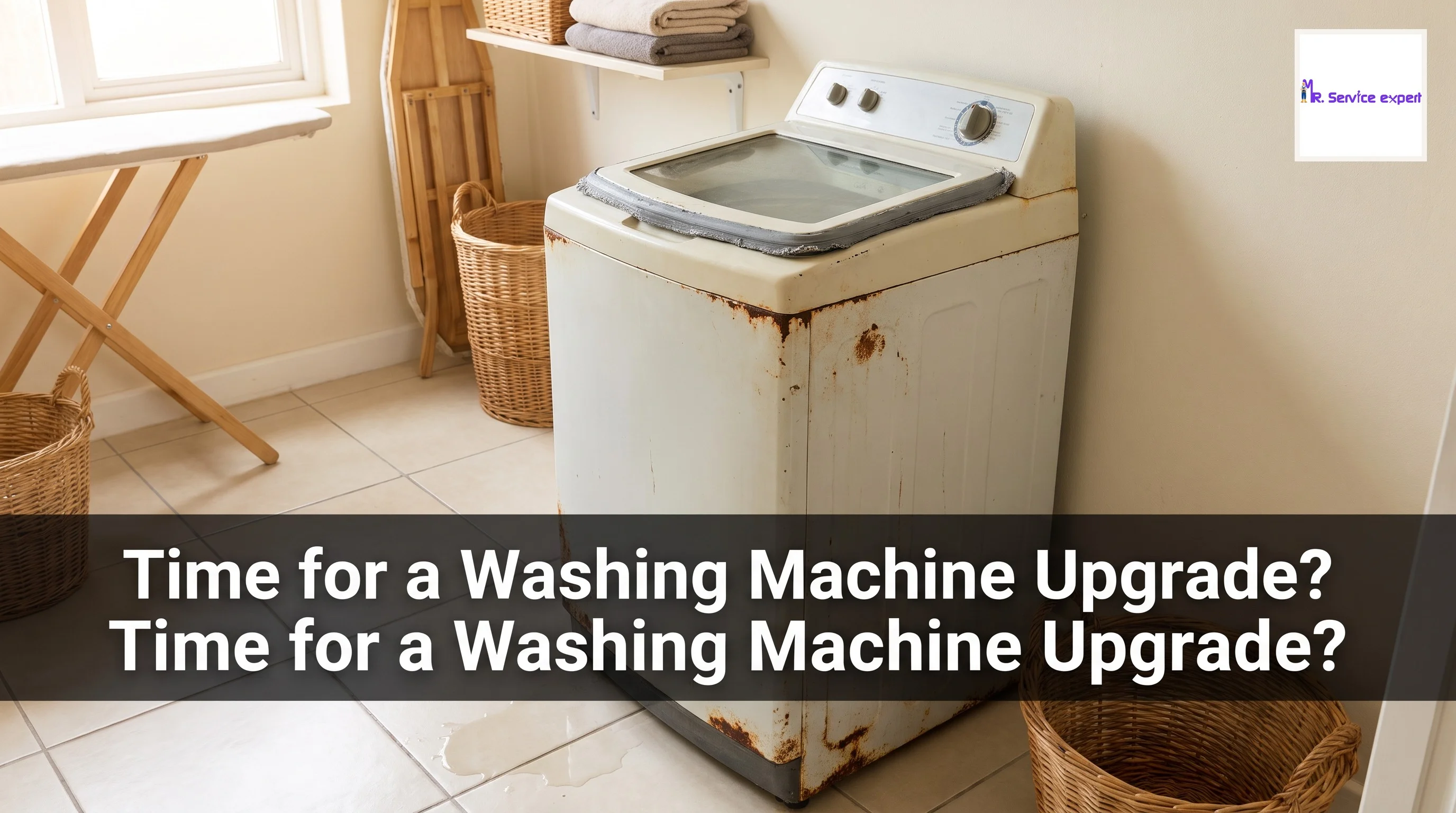
Signs You Need a New Washing Machine
Is your washing machine making strange noises during the spin cycle? Are your clothes coming out damp even after a full wash? These could be washing machine replacement signs that many Indian households ignore until complete breakdown. A washing machine is one of the most essential appliances in modern homes, working tirelessly to keep our clothes clean and fresh. However, like all machines, washing machines have a limited lifespan and eventually reach a point where repairs no longer make economic sense.
Understanding when to replace your washing machine can save you money, time, and frustration. While some issues can be fixed with simple washing machine repair, others indicate that your appliance has reached the end of its useful life. The average lifespan of a washing machine in India ranges from 8 to 12 years, depending on usage patterns, maintenance, and build quality. Beyond this period, old washing machine problems tend to multiply, leading to frequent breakdowns and inefficient performance.
Many homeowners struggle with the decision between washing machine repair vs replace. This dilemma often stems from emotional attachment to an appliance that has served faithfully for years, or from the misconception that any repair is cheaper than replacement. However, continuing to pour money into an aging machine can actually cost more in the long run through higher electricity bills, water wastage, and repeated repair expenses.
Recognizing the warning signs early helps you plan for a replacement rather than facing an emergency situation. From unusual vibrations and persistent leaks to rising utility bills and rust formation, these indicators tell you when your washing machine is crying out for retirement. Whether you live in Mumbai, Delhi, Bangalore, or any other Indian city, being aware of these signs helps you make informed decisions about your home appliances.
This comprehensive guide explores the most common washing machine replacement signs, helping you understand when washing machine reparing is no longer worth it and when investing in a new appliance makes better financial and practical sense. We will walk you through each symptom, explain what it means, and help you determine whether calling a washing machine technician for a washing machine fix is the solution or if it is time to start shopping for a replacement.
Age of Your Washing Machine
The age of your washing machine is perhaps the single most important factor in determining whether to repair or replace. Most washing machines manufactured today are designed to last between 8 to 12 years with regular maintenance. If your machine has crossed the 10-year mark, you should start considering replacement even if it still functions reasonably well.
Older machines, particularly those manufactured before 2015, consume significantly more electricity and water compared to modern energy-efficient models. A washing machine that is over a decade old might be costing you an extra 2000 to 3000 rupees annually in utility bills. Modern machines come with inverter technology and energy star ratings that can reduce consumption by up to 40 percent, making replacement a smart long-term investment.
Additionally, finding spare parts for washing machines older than 8 years becomes increasingly difficult in India. Even when parts are available, they often come at premium prices because manufacturers discontinue production of components for older models. This scarcity makes repairs increasingly expensive and time-consuming, often requiring multiple service visits before the right part is located.
The technology in washing machines has advanced considerably over the past decade. Newer models offer features like automatic detergent dispensers, multiple wash programs, better fabric care, and smartphone connectivity. These innovations not only improve washing quality but also extend the life of your clothes. If your washing machine predates these technological improvements, upgrading provides tangible benefits beyond just fixing problems.
When evaluating age, also consider usage intensity. A machine used twice daily in a large family will age faster than one used three times weekly in a smaller household. Calculate machine years by multiplying actual years by usage intensity to get a realistic picture of wear and tear.
Frequent Breakdowns and Repair Costs
One of the clearest washing machine replacement signs is when you find yourself calling a technician every few months. If your machine requires repairs more than twice a year, the cumulative costs likely exceed the value of keeping it operational. Track your repair expenses over the past 12 months and compare them to the cost of a new machine.
A useful rule of thumb followed by many experts is the 50 percent rule. If a single repair costs more than 50 percent of what a new washing machine would cost, replacement makes better financial sense. For example, if a new machine costs 20,000 rupees and the repair estimate is 12,000 rupees, investing in a new appliance provides better value and comes with a warranty.
Frequent washing machine not working incidents disrupt your household routine and force you to rely on expensive laundry services or hand washing. The inconvenience factor alone justifies replacement when breakdowns become regular occurrences. Consider the time wasted waiting for repair appointments, the stress of dealing with wet clothes piling up, and the uncertainty of when the next breakdown will occur.
Multiple component failures within a short timeframe indicate systemic deterioration. When your washing machine experiences issues with the motor, drum, control panel, and drainage system within months of each other, it signals that the entire machine is failing. Replacing one component does not prevent others from breaking down soon after.
Some repairs, while technically possible, are simply not worth pursuing. Motor replacement, drum replacement, or control board replacement on machines older than 7 years rarely makes economic sense. These major components constitute the heart of the washing machine, and their failure indicates that the appliance has lived its useful life.
Excessive Noise and Vibration
Washing machines normally produce some noise during operation, but excessive or unusual sounds clearly indicate old washing machine problems. If your machine sounds like it is struggling, grinding, or banging during the wash or spin cycle, internal components are likely worn out or damaged. Loud thumping noises suggest that the drum bearings have deteriorated, a repair that costs anywhere from 3000 to 8000 rupees depending on the model.
Vibration is another telltale sign of trouble. While some movement is normal during the spin cycle, a washing machine that walks across the floor or shakes violently needs immediate attention. This could result from an unbalanced load, but if the problem persists even with properly distributed clothes, it points to suspension issues or a warped drum.
Grinding or squealing noises often indicate bearing failure or belt problems. The drum bearings allow the inner drum to rotate smoothly, and when they wear out, metal grinds against metal, creating harsh sounds. This not only makes operation unpleasant but can also damage other components if left unaddressed.
Rattling sounds might come from loose parts, foreign objects stuck in the drum, or deteriorating internal components. While a technician can diagnose and sometimes fix these issues, recurring noise problems in older machines suggest widespread internal wear that will continue manifesting in different ways.
If your washing machine has become so noisy that you cannot hold a conversation in the same room or it disturbs sleep when running at night, quality of life considerations alone justify replacement. Modern machines operate much more quietly thanks to improved insulation, better motor technology, and advanced suspension systems.
Water Leakage and Drainage Issues
Water pooling around your washing machine is one of the most visible washing machine replacement signs and demands immediate attention. Leaks can damage flooring, promote mold growth, and waste significant amounts of water. While some leaks result from loose hose connections or worn door seals that can be easily fixed, persistent leaking despite repairs indicates deeper structural problems.
Common leak sources include cracked drums, deteriorated seals, corroded hoses, and faulty water inlet valves. A cracked drum cannot be repaired and requires complete replacement, which costs almost as much as a new washing machine in most cases. If a technician identifies the drum as the leak source, replacement is the only sensible option.
Drainage problems manifest as water remaining in the drum after the cycle completes or water backing up into the machine. These issues might stem from clogged drain pumps, kinked hoses, or blocked filters. However, if cleaning filters and inspecting hoses does not resolve the problem, the drainage pump itself may be failing. Pump replacement costs between 2000 to 5000 rupees, and on older machines, this expense may not be justified.
Water filling too slowly or not filling at all points to inlet valve problems or internal plumbing deterioration. While repairs can address valve issues, machines experiencing multiple water-related problems simultaneously are showing systemic failure that cannot be permanently resolved.
Repeated drainage issues force you to manually remove water from the drum, defeating the entire purpose of having an automatic washing machine. The inconvenience, combined with the water damage risk, makes replacement the practical choice when drainage problems persist despite professional repair attempts.
Rusty Appearance and Structural Damage
Rust formation on your washing machine indicates moisture has penetrated the protective coating and is corroding the metal structure. This is particularly common in humid Indian climates, especially in coastal cities like Mumbai, Chennai, and Kolkata. Surface rust on the exterior might be merely cosmetic, but rust inside the drum or on structural components represents serious old washing machine problems.
Rust inside the drum transfers to your clothes, leaving brown or orange stains that are difficult to remove. Once rust has formed inside the drum, it progressively worsens with each wash cycle. Replacing a rusted drum is expensive and rarely worth the investment on machines older than 6 years.
Structural damage includes cracks in the outer tub, broken door hinges, damaged control panels, and deteriorated drum spider arms. The drum spider is a crucial component that connects the drum to the drive shaft, and its failure causes severe vibration and noise. Spider arm replacement requires complete disassembly of the machine and costs upward of 5000 rupees plus labor.
Cracks in the outer plastic or metal body might seem minor but can lead to water leakage and electrical hazards. Water seeping into electrical components creates short circuit risks and can cause the machine to trip your home's electrical system. Safety concerns should override cost considerations when structural damage is present.
If your washing machine shows multiple signs of physical deterioration such as rust, cracks, broken knobs, damaged doors, and fading surfaces, it has reached the end of its aesthetic and functional life. Even if repairs temporarily restore function, the underlying deterioration will continue manifesting in new ways.
Washing Performance Decline
The primary purpose of a washing machine is to clean clothes effectively, so declining wash quality is one of the most significant washing machine replacement signs. If your clothes come out still dirty, carry detergent residue, or smell musty despite proper washing, your machine is failing its basic function.
Poor cleaning results from several factors including worn agitators in top-loading machines, weakened water pressure due to pump deterioration, temperature control failures, or drum rotation problems. While some issues respond to repairs, others indicate that multiple systems have degraded beyond effective restoration.
Clothes coming out overly wrinkled, tangled, or damaged suggest excessive mechanical action from a malfunctioning drum or improper spin cycles. Modern washing machines have sophisticated programs to protect fabric while cleaning thoroughly, and older machines lacking these features subject clothes to unnecessary wear.
Incomplete rinsing leaves detergent residue in fabrics, which can cause skin irritation and allergic reactions. This problem often stems from inadequate water filling, poor drainage, or malfunctioning rinse cycle programming. If your family experiences increased skin sensitivity or allergic symptoms after wearing washed clothes, your machine's rinsing function may be compromised.
Spin cycle efficiency directly impacts drying time and energy consumption. Clothes coming out excessively wet indicate that the spin function is not working properly, forcing you to spend more time and electricity drying them. This inefficiency accumulates over time, significantly increasing your overall laundry costs.
Rising Utility Bills
An unexpected increase in electricity or water bills often traces back to old washing machine problems. Aging machines lose efficiency as components wear out, motors work harder, and systems consume more resources to achieve the same results. Compare your utility bills from the past year to identify unusual spikes that coincide with washing machine use.
Older washing machines, particularly those without energy star ratings, consume significantly more electricity than modern models. A washing machine from 2010 might use 500 to 700 units of electricity annually, while a 2026 energy-efficient model consumes only 200 to 300 units for the same workload. This difference translates to savings of 2000 to 4000 rupees yearly on electricity alone.
Water consumption follows similar patterns. Older machines use 150 to 200 liters per wash cycle, while modern machines with advanced load sensing use only 60 to 100 liters. In cities where water costs are high or supply is limited, this efficiency gap makes replacement financially attractive within just a few years.
Leaking machines waste water continuously, and small, unnoticed leaks can add hundreds of liters to your monthly consumption. If your water bill has risen without corresponding increases in household usage, check your washing machine for slow leaks that might be draining into floor drains unnoticed.
Heating element inefficiency in washing machines with built-in heaters causes electricity consumption to spike. If the heating element has scaled up or partially failed, it draws more power while providing less heating, making warm water washes increasingly expensive to run.
Comparison: Repair vs Replace Decision Matrix
| Factor | Repair | Replace |
|---|---|---|
| Machine Age | Under 5 years | Over 8 years |
| Repair Cost | Less than 30% of new machine cost | More than 50% of new machine cost |
| Frequency of Issues | First or second repair | Third repair within 12 months |
| Energy Efficiency | Energy star rated, recent model | No energy rating, pre-2015 model |
| Parts Availability | Readily available | Discontinued or hard to find |
| Warranty Status | Still under warranty | Warranty expired years ago |
| Annual Utility Cost Increase | No significant increase | 20% or higher increase |
When to Call a Washing Machine Technician First
Before deciding on replacement, certain situations warrant calling a professional for diagnosis. Minor issues like clogged filters, loose hoses, unbalanced loads, or simple error codes often have quick, inexpensive solutions. A fix for these problems costs between 300 to 1000 rupees and can extend your machine's life by years.
Door seal problems, which cause minor leaks, can be resolved through seal replacement costing 800 to 2000 rupees. This repair makes sense for machines under 6 years old and is definitely worth pursuing before considering replacement. Similarly, replacing worn belts or cleaning blocked drainage systems are maintenance tasks rather than major repairs.
If your washing machine is still under warranty or extended warranty, always contact the authorized service center first. Warranty coverage can save you thousands of rupees on repairs that would otherwise be expensive. Even if the specific issue is not covered, the technician can provide an accurate diagnosis and cost estimate.
New or nearly new machines experiencing problems should always be repaired rather than replaced. Issues within the first 5 years often result from manufacturing defects, installation errors, or usage problems rather than natural wear. These are exactly the situations where repairs make complete sense.
Get multiple opinions when facing a major repair decision. Different professionals may offer varying diagnoses and cost estimates. A second opinion helps ensure you are not being overcharged or misdiagnosed, and provides better information for making the repair versus replace decision.
Environmental and Economic Considerations
The decision between repair and replacement extends beyond immediate costs to include environmental impact. Disposing of a washing machine adds electronic waste to landfills, where metals, plastics, and chemicals can cause environmental harm. However, continuing to use an inefficient machine also has environmental costs through excessive water and energy consumption.