
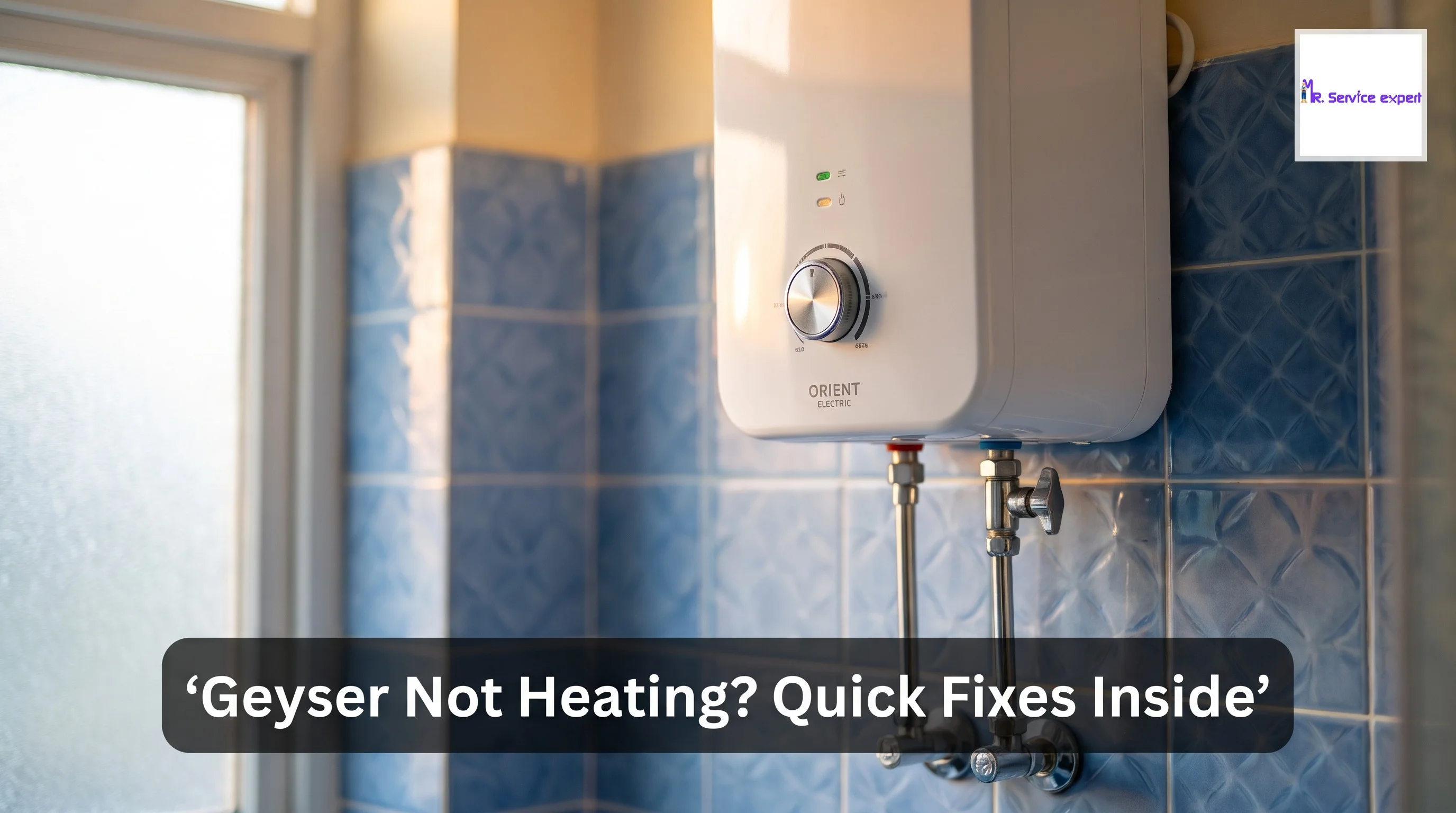
Geyser not heating water: causes and fixes
There's nothing more frustrating than stepping into the bathroom on a cold winter morning, turning on the tap, and discovering your geyser not heating water. This common household problem affects millions of Indian homes every year, leaving families scrambling for solutions during the chilliest months. Whether you're in Delhi facing sub-zero temperatures or in Bangalore experiencing a sudden cold spell, a malfunctioning geyser can disrupt your entire daily routine and leave everyone in the household irritable and uncomfortable.
Understanding why your geyser stops heating water is the first step toward fixing the problem. Most geyser issues stem from a handful of common causes that range from simple fixes anyone can handle to more complex problems requiring professional intervention. The good news is that many of these problems can be diagnosed and resolved without spending thousands of rupees on expensive repairs or replacements. In this comprehensive guide, we'll walk you through everything you need to know about identifying the root cause of your geyser troubles and implementing effective solutions.
Before we dive into specific problems and fixes, it's worth noting that regular geyser maintenance can prevent most heating issues from occurring in the first place. Many Indian households ignore their geysers until something goes wrong, but a little preventive care goes a long way. When choosing a geyser for home, understanding how it works and what can go wrong will help you make smarter decisions about capacity, type, and features that suit your specific needs and budget.
The heating capacity of your geyser plays a crucial role in its performance and longevity. Selecting the best geyser capacity for your household size and usage patterns can prevent overworking the appliance and extend its lifespan. A family of four typically needs a different capacity than a single person or a couple, and understanding these requirements is essential for both purchasing decisions and troubleshooting heating problems.
This article will cover the most common reasons your geyser stops heating water, practical troubleshooting steps you can take yourself, when to call for professional geyser repair service, and preventive measures to keep your water heater functioning optimally throughout the year. By the end, you'll have a complete geyser buying guide perspective on what makes these appliances tick and how to keep yours running smoothly.
Understanding How Your Geyser Works
Before identifying what's wrong with your geyser, it helps to understand the basic mechanics of how these appliances heat water. Most Indian homes use either storage water heaters or instant geysers, and both operate on similar fundamental principles despite their structural differences.
Storage geysers contain a tank that holds water, which is heated by an electric heating element or gas burner. The thermostat monitors water temperature and signals the heating element to turn on or off based on your desired temperature setting. An insulated outer body helps retain heat, reducing energy consumption by minimizing heat loss. Inside the tank, cold water enters through the dip tube at the bottom, gets heated, and hot water exits from the top through the outlet pipe, taking advantage of hot water's natural tendency to rise.
Instant or tankless geysers work differently by heating water on demand as it flows through the unit. These compact devices contain powerful heating elements that rapidly heat water to the desired temperature within seconds. While they save space and energy by not storing hot water, they have limitations on flow rate and may struggle to supply multiple outlets simultaneously.
The key components that enable water heating include the heating element (usually made of copper or stainless steel), the thermostat that controls temperature, the pressure relief valve for safety, the anode rod that prevents tank corrosion, and various electrical connections that power the system. When any of these components malfunction, your geyser stops heating water effectively or stops working altogether.
Understanding these basics helps you communicate better with technicians during geyser repair and makes you a more informed consumer when evaluating options in any geyser buying guide. It also helps you identify which component might be causing your specific heating problem based on the symptoms you observe.
Common Causes Why Your Geyser Stops Heating Water
Faulty or Burnt-Out Heating Element
The heating element is the heart of your geyser, and when it fails, heating stops completely or becomes inadequate. These elements typically last 8-12 years but can fail prematurely due to hard water, sediment buildup, or manufacturing defects. In Indian conditions where water hardness varies significantly by region, heating elements in cities like Delhi, Mumbai, and Bangalore often face accelerated wear from mineral deposits.
Signs of a faulty heating element include no hot water at all, water that takes much longer than usual to heat, or water that gets lukewarm but never truly hot. You might also notice unusual noises like popping or crackling sounds, which indicate sediment buildup around the element causing it to work harder and eventually burn out. Testing the heating element requires a multimeter to check for continuity, but if you lack technical expertise, it's safer to call for professional assistance.
Replacing a heating element typically costs between Rs 800 and Rs 2500 depending on the geyser model and element quality. While this is a relatively straightforward repair for experienced technicians, attempting it yourself without proper knowledge can be dangerous due to electrical hazards and the risk of damaging other components.
Malfunctioning Thermostat
The thermostat acts as the brain of your geyser, controlling when the heating element turns on and off to maintain your desired water temperature. When the thermostat malfunctions, you might experience several symptoms: water that's too hot or too cold, water temperature that fluctuates unpredictably, or the heating element that never turns on despite power being available.
Thermostats can fail due to age, electrical surges, or calibration drift over time. In some cases, the thermostat hasn't failed completely but has been accidentally adjusted to a lower temperature setting, resulting in lukewarm water that seems like a heating problem. Before assuming a faulty thermostat, check if someone has changed the temperature setting or if the dial has been bumped accidentally.
Testing a thermostat requires specific tools and knowledge of electrical systems. The component typically costs Rs 500 to Rs 1500 to replace, making it an affordable fix that can restore your geyser to full functionality. However, if both the thermostat and heating element have failed simultaneously, which sometimes happens in older units, you might need to evaluate whether repairs make economic sense or if replacement is more practical.
Power Supply Issues
Sometimes the problem isn't with the geyser itself but with the electrical supply reaching it. Tripped circuit breakers, blown fuses, loose wiring connections, or faulty wall switches can all prevent your geyser from receiving power and consequently from heating water. This is often the simplest problem to diagnose and fix, yet many people overlook it and immediately assume their geyser has a major malfunction.
Start by checking your home's electrical panel for any tripped breakers. Geysers draw significant current, especially during heating cycles, and a breaker might trip if the circuit is overloaded with other appliances. Reset any tripped breakers and see if the geyser starts working. If the breaker trips again immediately, you likely have a short circuit within the geyser or its wiring that requires professional attention.
Inspect the geyser's power switch (usually mounted on the wall near the unit) to ensure it's in the ON position and functioning properly. Sometimes these switches fail internally, and replacing them costs only Rs 150-300. Check visible wiring for any signs of damage, burning, or loose connections, but never touch exposed wires or attempt electrical repairs unless you're qualified to do so. Electrical issues should always be handled by licensed electricians or trained technicians.
Sediment Buildup and Scale Formation
Hard water is a reality in most Indian cities, and the minerals it contains—primarily calcium and magnesium—gradually accumulate inside your geyser tank. This sediment settles at the bottom of the tank, directly covering the heating element and creating an insulating barrier that prevents efficient heat transfer to the water. The result is significantly longer heating times, increased electricity bills, and eventually, complete heating failure as the element burns out from overheating.
The severity of sediment buildup depends on your local water hardness and how long the geyser has operated without maintenance. In areas with extremely hard water, significant deposits can form within just 6-12 months. You'll know sediment is a problem if you hear rumbling or popping noises during heating cycles, notice rust-colored or cloudy hot water, or find that your geyser takes much longer to heat water than it used to.
Flushing the tank to remove sediment is part of essential preventive care that should be performed annually in hard water areas and every 2-3 years in regions with softer water. Professional tank flushing costs Rs 500-1000 and can dramatically improve heating efficiency and extend your geyser's lifespan. If you're confident in your DIY skills, tank flushing can be done at home by turning off power and water supply, connecting a hose to the drain valve, and flushing until water runs clear.
Pressure Relief Valve Problems
The pressure relief valve is a critical safety component that prevents dangerous pressure buildup inside the tank. When this valve malfunctions, it can cause various problems including inadequate heating. A stuck-open valve continuously releases hot water, forcing the geyser to work overtime trying to maintain temperature. A stuck-closed valve can create dangerous pressure conditions and trigger safety cutoffs that prevent heating.
You can identify pressure valve issues by checking for water dripping or spraying from the valve, which indicates it's partially open or damaged. Some water dripping during heating is normal as water expands when heated, but continuous or excessive dripping suggests a problem. If the valve never releases any water during operation, it might be stuck closed, which is actually more dangerous than being stuck open.
Pressure relief valves should be tested every six months by lifting the test lever to ensure water flows freely and stops completely when released. If the valve fails this test or shows signs of corrosion or damage, replacement is mandatory for safety reasons. These valves typically cost Rs 300-800 and are straightforward for professionals to replace, making this an inexpensive fix that shouldn't be delayed.
DIY Troubleshooting Steps You Can Try
Before calling for professional repairs, there are several diagnostic steps you can safely perform yourself. Start by checking the simplest potential causes: ensure the power switch is on, verify the circuit breaker hasn't tripped, and confirm the temperature setting on the thermostat is adequate (typically 60-65 degrees Celsius for optimal performance).
Listen carefully to your geyser during operation. If you hear clicking sounds, the thermostat is likely working and signaling the heating element to turn on. If you hear humming but no heating occurs, the element might be getting power but has failed internally. Popping or rumbling sounds indicate sediment buildup that needs addressing. Complete silence when power is on suggests an electrical supply problem or failed thermostat.
Visually inspect the geyser for any obvious problems: leaking water, rust or corrosion on the exterior, damaged wiring, or burnt electrical connections. Check the water flowing from hot taps—if it's rust-colored or contains sediment particles, internal corrosion or buildup is affecting performance. Test multiple hot water taps in your home to determine if the problem affects all outlets (geyser issue) or just one (plumbing issue at that specific tap).
Feel the geyser's exterior during what should be a heating cycle. If the tank remains completely cold, no heating is occurring. If it's slightly warm only at the very top, the upper heating element might be working while the lower one has failed (in dual-element models). If the tank becomes extremely hot to touch, the thermostat might be malfunctioning and failing to cut off power when target temperature is reached.
Document your observations including when the problem started, any recent changes to your home's electrical system, whether the issue is intermittent or constant, and any unusual sounds or smells. This information will be valuable when discussing the problem with repair technicians and might help them diagnose the issue more quickly, potentially saving you money on diagnostic fees.
When to Call Professional Geyser Repair Service
While some geyser problems can be handled with DIY approaches, many situations require professional expertise for safety and effectiveness. Any issue involving electrical components should be handled by qualified technicians unless you have proper electrical training. Working with water and electricity simultaneously creates serious electrocution risks that aren't worth taking for the average homeowner.
Call professionals immediately if you smell burning plastic or rubber near the geyser, see sparks or charred areas around electrical connections, notice water leaking from the tank body (not from valves or connections), or if the circuit breaker trips repeatedly when you try to run the geyser. These symptoms indicate serious problems that could lead to fire, electrical hazards, or catastrophic tank failure if not addressed promptly.
For component replacements like heating elements, thermostats, or pressure valves, professional installation ensures proper specifications and safe operation. Technicians have the tools to properly drain the tank, test electrical continuity, correctly wire new components, and verify safe operation before leaving. The peace of mind and warranty coverage that comes with professional service typically justifies the service cost, which ranges from Rs 500 to Rs 3000 depending on the specific problem and parts needed.
Establish a relationship with a reliable service provider for routine maintenance rather than scrambling to find help during emergencies. Regular professional servicing (annually for older units, every 2-3 years for newer ones) catches problems early when they're cheaper and easier to fix. Many service providers offer annual maintenance contracts that include periodic inspections, tank flushing, component testing, and priority service if problems arise.
Comparing Geyser Types and Capacities
| Geyser Type | Best Capacity for Family Size | Heating Time | Average Lifespan | Maintenance Frequency |
|---|---|---|---|---|
| Storage Electric | 15L (1-2 people), 25L (3-4 people), 35L+ (5+ people) | 15-30 minutes | 10-15 years | Every 12 months |
| Instant Electric | 3L-6L (1-2 people) | 30-60 seconds | 8-12 years | Every 18-24 months |
| Gas Geyser | 6L-12L continuous flow | Instant | 12-18 years | Every 6-12 months |
| Solar Geyser | 100L-300L based on family | 2-4 hours (sunny day) | 15-20 years | Every 24 months |
Selecting the best geyser capacity is crucial for both performance and energy efficiency. Undersized geysers run constantly trying to meet demand, leading to accelerated wear and higher electricity bills. Oversized units waste energy heating water that's never used and cost more upfront without providing proportional benefits. When following any geyser buying guide, carefully assess your household's actual hot water consumption patterns.
For Indian households, a family of 2-3 people typically needs a 15-25 liter storage geyser, while families of 4-5 require 25-35 liters. Larger families or homes with multiple bathrooms should consider 35-50 liter units or multiple smaller geysers strategically located. Instant geysers work well for kitchens or single bathrooms but struggle to supply multiple outlets simultaneously or fill bathtubs efficiently.
Key Takeaways
When your geyser fails to heat water, the culprit could be a faulty thermostat, sediment buildup in the tank, a tripped circuit breaker, or a malfunctioning heating element. Learn more about diagnostic techniques to identify these issues quickly, understand the difference between repairable problems and those requiring professional intervention, and discover preventive maintenance practices that extend your geyser's lifespan while ensuring consistent hot water supply throughout winter months.