
How to Choose the Right Kitchen Chimney for Your Kitchen
Cooking in an Indian kitchen is an aromatic, vibrant experience, but it also comes with smoke, grease, and stubborn odors that cling to walls and ceilings. If you have ever walked into your kitchen and felt the lingering smell of last night's tadka or noticed a greasy film on your cabinets, you know exactly what we are talking about. A kitchen chimney is not just a luxury anymore; it has become an essential appliance for modern Indian homes. With so many options flooding the market in 2026, choosing the best kitchen chimney can feel overwhelming. Should you go for a baffle filter or a cassette filter? What suction power do you actually need? Does size really matter?
This kitchen chimney buying guide is here to clear the confusion and help you make an informed decision. We will walk you through everything from understanding the basics to identifying the right features for your specific cooking style. Whether you cook daily meals for a small family or host elaborate dinner parties every weekend, there is a chimney designed to meet your needs. The right chimney not only keeps your kitchen clean and odor-free but also protects your health by removing harmful smoke and pollutants. Plus, it extends the life of your kitchen furniture and paint by preventing grease buildup.
Indian cooking involves a lot of frying, tempering, and spice roasting, which produces significantly more smoke compared to western cooking styles. This makes the selection process even more critical. You cannot simply pick any chimney off the shelf and expect it to handle the heat and smoke of your daily cooking. Understanding your kitchen layout, cooking habits, and chimney specifications will save you from making an expensive mistake.
In this comprehensive guide, we will cover the types of chimneys available, how to calculate the right suction power, the importance of filters, installation considerations, and maintenance tips. By the end of this article, you will have all the knowledge you need to choose a chimney that fits your kitchen perfectly and keeps it fresh and clean for years to come.
Let's dive into the world of kitchen chimneys and find the perfect match for your cooking space.
Understanding Kitchen Chimney Basics and Why You Need One
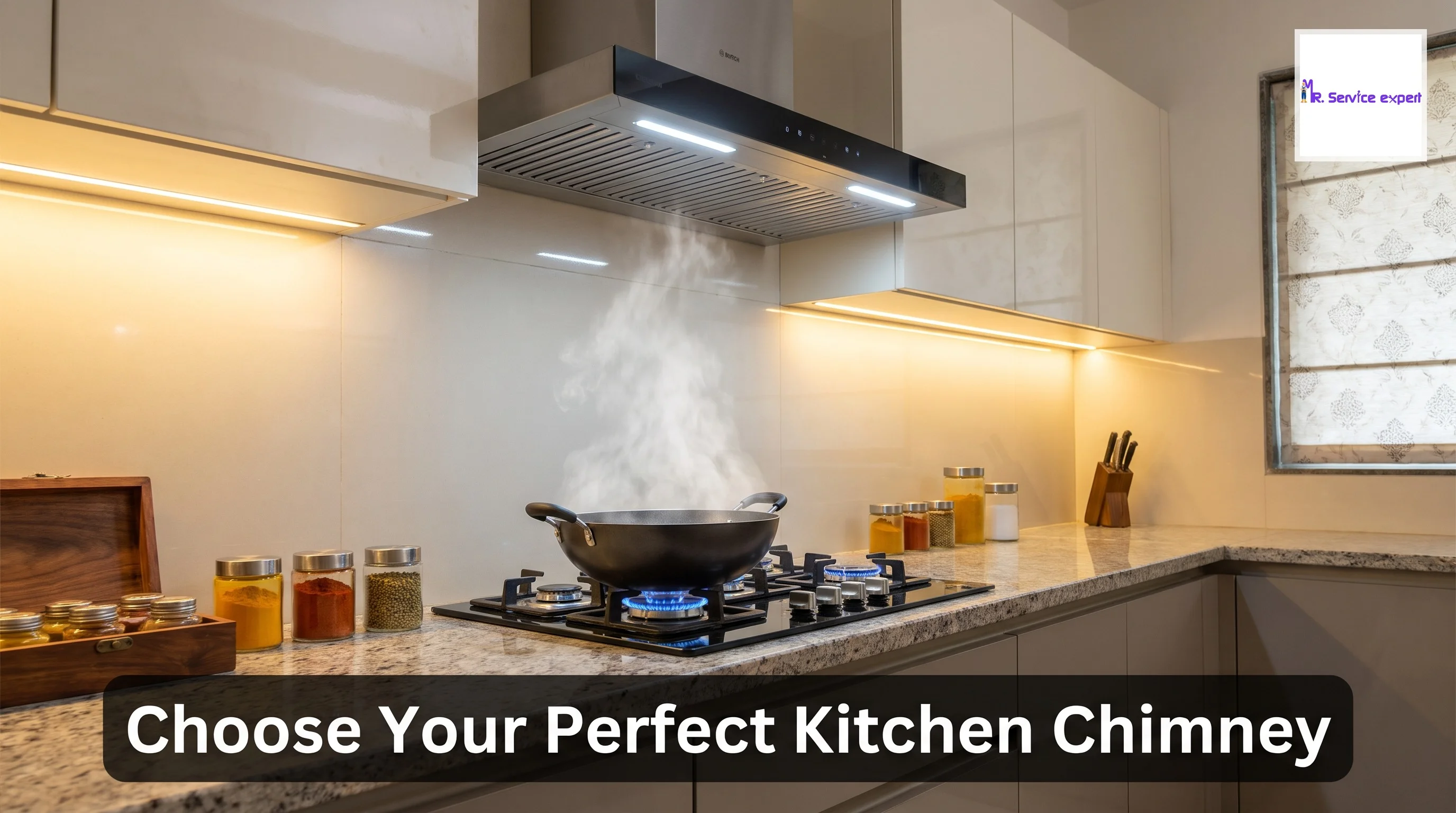
A kitchen chimney is an appliance installed above your cooking range to suck up smoke, oil particles, heat, and odors produced during cooking. It works on a simple principle: a powerful motor creates suction that pulls the contaminated air through filters and either expels it outside through a duct or recirculates it back into the kitchen after purification. For Indian kitchens where heavy-duty cooking is the norm, a chimney acts as the first line of defense against grease accumulation and air pollution.
The benefits go beyond just a clean kitchen. Regular exposure to cooking smoke, especially from gas stoves, can cause respiratory issues over time. A good chimney significantly improves indoor air quality by removing harmful particulates and gases. It also maintains the aesthetic appeal of your kitchen by preventing those yellowish stains on walls and preventing your expensive modular kitchen from losing its shine within months.
When you start looking for the best kitchen chimney, you will notice they come in various designs, sizes, and price ranges. The key is not to get swayed by flashy features alone but to understand what actually matters for your cooking environment. Some chimneys are designed for light cooking, while others can handle the smoke from multiple burners running simultaneously with heavy frying and grilling.
The motor capacity, measured in cubic meters per hour, determines how much air the chimney can extract. The filter type decides how effectively it traps grease and how easy it is to maintain. The chimney size should match your cooktop dimensions for optimal performance. All these factors work together to give you a functional and efficient kitchen ventilation system.
Investing in a quality chimney also means you are protecting your kitchen appliances and furniture. Grease and smoke can damage electronic controls on your microwave, refrigerator, and other appliances placed nearby. It can also weaken the adhesive on your kitchen cabinets and warp wooden surfaces over time. A chimney is therefore not just about comfort but about preserving your entire kitchen investment.
Types of Kitchen Chimneys: Finding Your Perfect Match
Kitchen chimneys come in several types, each designed for different kitchen layouts and aesthetic preferences. Understanding these types will help you narrow down your options quickly when you start your kitchen chimney buying guide journey.
Wall-mounted chimneys are the most common type installed against the kitchen wall directly above the cooktop. They are ideal for kitchens where the cooking range is placed along a wall. These chimneys come in various designs from sleek curved glass models to angular stainless steel ones. They offer excellent suction power and are relatively easy to install with proper kitchen chimney installation service support.
Island chimneys are designed for modern open kitchens where the cooking range is placed on a kitchen island in the center of the room. These are suspended from the ceiling and make a bold style statement. They usually have higher suction capacity since they need to pull smoke from all sides. Island chimneys are perfect if you have a spacious kitchen with a contemporary design theme.
Built-in or integrated chimneys are concealed within the kitchen cabinet, leaving only the suction panel visible. These are perfect for minimalist kitchen designs where you want the appliances to blend seamlessly with the cabinetry. They save space and give a clean, streamlined look but may have slightly lower suction power compared to wall-mounted models of the same motor capacity.
Corner chimneys are specifically designed for cooking ranges installed in the corner of the kitchen. They have a unique triangular or curved design that fits snugly into corners and maximizes the use of kitchen space. These are less common but extremely practical for compact kitchen layouts.
Chimney hoods, also called range hoods, are traditional designs that cover the entire cooking area with a hood-like structure. They provide maximum coverage and are highly effective for heavy cooking. Modern versions come with sleek designs and powerful motors, making them suitable for both traditional and contemporary kitchens.
When choosing among these types, consider your kitchen layout first. A wrong type installed in your kitchen will not only look odd but may also fail to provide adequate ventilation. Match the chimney type with your interior design theme, available space, and budget to find your best kitchen chimney option.
Suction Power: The Heart of Chimney Performance
Suction power is the single most important specification to consider when buying a kitchen chimney. It is measured in cubic meters per hour and indicates how much air the chimney can extract in one hour. For Indian cooking conditions, you cannot compromise on this aspect.
As a general rule, the suction power should be calculated based on your kitchen size and cooking habits. The standard formula is to multiply the kitchen area by the height and then multiply the result by twelve. For example, if your kitchen is four meters long, three meters wide, and three meters high, the volume is thirty-six cubic meters. Multiplying by twelve gives you four hundred thirty-two cubic meters per hour as the minimum suction capacity needed.
However, this is just the baseline. Indian cooking involves more smoke production, so adding a safety margin of at least twenty to thirty percent is wise. If you cook frequently with multiple burners or do a lot of deep frying, tandoori cooking, or grilling, opt for chimneys with suction power of seven hundred to twelve hundred cubic meters per hour.
Higher suction power means the chimney can handle more smoke and clear the air faster. But remember, a very powerful motor also means more noise. Look for models that balance suction power with noise levels, ideally staying below fifty-eight decibels for comfortable cooking. The best kitchen chimney will offer strong suction without turning your kitchen into a noisy zone.
Suction efficiency also depends on whether you install a ducted or ductless chimney. Ducted chimneys expel air outside through a duct pipe and are generally more effective for heavy cooking. Ductless or recirculating chimneys filter the air and release it back into the kitchen. They are easier to install but require frequent filter changes and are better suited for light to moderate cooking.
If your cooking routine involves daily preparation of multiple meals with significant frying and spice roasting, do not settle for anything below six hundred cubic meters per hour. Investing in adequate suction power from the start will save you from disappointment and the need to upgrade within a year. Remember, suction power directly impacts how clean and fresh your kitchen stays after cooking.
Filter Types and Their Impact on Maintenance
The kitchen chimney filter is what traps grease, oil particles, and other contaminants from the air before it passes through the motor. Choosing the right filter type is crucial because it affects both the chimney's efficiency and your maintenance workload. The three main types of filters available in 2026 are baffle filters, cassette filters, and charcoal filters.
Baffle filters are made of stainless steel panels arranged in a way that forces the air to change direction multiple times. This causes the grease particles to separate and drip down into a collection tray. Baffle filters are highly efficient, durable, and easy to clean. You can simply remove them and wash with soap and water or put them in a dishwasher. They are ideal for heavy Indian cooking and are found in most premium chimneys. If you want the best kitchen chimney for long-term use with minimal hassle, baffle filters are your go-to choice.
Cassette filters, also called mesh filters, are made of multiple layers of aluminum or stainless steel mesh. They trap grease as air passes through but tend to clog faster than baffle filters. Cassette filters require more frequent cleaning, typically every two weeks if you cook daily. They are less expensive and commonly found in budget to mid-range chimneys. While they work reasonably well, they may not handle very heavy cooking as efficiently as baffle filters.
Charcoal filters are used exclusively in ductless chimneys to remove odors after the grease has been trapped by the primary filter. These filters contain activated charcoal that absorbs smell molecules. Charcoal filters cannot be washed and need replacement every three to six months depending on usage. This adds to the recurring cost of maintenance. If you are considering a ductless chimney, factor in the cost and availability of replacement charcoal filters.
Some modern chimneys come with filterless technology, claiming to separate grease using centrifugal force or oil collector mechanisms. While these sound convenient, they are still relatively new in the Indian market and their long-term performance in heavy cooking conditions is yet to be proven conclusively.
The filter you choose directly impacts how often you need kitchen chimney cleaning and how well your chimney performs over time. Clogged filters reduce suction efficiency, put extra strain on the motor, and can even pose a fire hazard if grease accumulates excessively. Regular cleaning and timely filter maintenance are essential regardless of the type you choose. If you prefer low maintenance, stick with baffle filters and ensure you schedule periodic cleaning with a professional kitchen chimney technician to keep everything running smoothly.
Size Matters: Matching Chimney Dimensions to Your Cooktop
One common mistake people make is choosing a chimney based purely on design or brand without considering the size compatibility with their cooktop. The chimney should ideally be equal to or slightly larger than the width of your cooking range for optimal smoke capture.
Standard cooktop sizes in India range from two-burner models at around sixty centimeters to four-burner models at seventy-five to ninety centimeters. Your chimney width should match or exceed this measurement. If your cooktop is sixty centimeters wide, a sixty to seventy-five centimeter chimney works well. For a ninety-centimeter cooktop, choose a chimney that is at least ninety centimeters wide.
A chimney that is too small will not be able to capture all the smoke and fumes, allowing them to escape into the kitchen. This defeats the entire purpose of having a chimney. Smoke will still spread around the cooking area, and you will not get the clean air you expect. On the other hand, an excessively large chimney on a small cooktop looks disproportionate and may not justify the extra cost.
The installation height also plays a role in efficiency. Most manufacturers recommend installing the chimney at a height of sixty-five to seventy-five centimeters above the cooktop. If installed too low, it can be a safety hazard and may get damaged by heat. If too high, it will not effectively capture the rising smoke. Proper kitchen chimney installation service ensures the height is optimized based on your specific kitchen setup and chimney model.
Consider the depth of the chimney as well, especially if you have a deep countertop. The chimney should extend adequately over the cooking surface to ensure complete coverage. For kitchens with multiple burners arranged in a line, ensure the chimney covers the entire range, not just the front burners.
Measure your cooktop accurately before shopping and check the chimney dimensions carefully in the product specifications. Do not rely solely on how it looks in the showroom. Take actual measurements and visualize how it will fit above your stove. This simple step can save you from installation headaches and performance issues later.
Ducted vs Ductless: Which Installation Type Suits You
The debate between ducted and ductless chimneys is crucial in your kitchen chimney buying guide journey. Both have their advantages and limitations, and the right choice depends on your kitchen layout and installation feasibility.
Ducted chimneys, also called vented chimneys, expel the contaminated air outside through a duct pipe connected to an external vent or window. This is the more effective option for Indian kitchens because it completely removes smoke, grease, and odors from the indoor environment. There is no recirculation, which means cleaner air and no need for charcoal filters. The only filters required are the grease filters, which are easy to maintain.
The challenge with ducted installation is that it requires external ducting work. You need a clear path to an external wall or window where the duct can be routed. This might involve drilling holes, running pipes through cabinets, or even through walls. If you live in an apartment building, getting permission for external venting might be necessary. The installation process is more complex and usually requires professional kitchen chimney installation service to ensure proper ducting, minimal bends in the pipe, and secure mounting.
Ductless chimneys, also known as recirculating chimneys, filter the air and release it back into the kitchen. They use a combination of grease filters and charcoal filters to clean the air before recirculation. These are much easier to install since they do not require any external ducting. You can place them anywhere above the cooktop without worrying about access to an external vent.
However, ductless chimneys have limitations. They do not actually remove the air from the kitchen, just filter and recirculate it. This means they are less effective at removing heat and humidity. The charcoal filters need regular replacement, adding to maintenance costs and effort. For heavy Indian cooking with lots of frying and strong spices, a ductless chimney may not provide the same level of cleanliness and freshness as a ducted one.
If your kitchen layout allows for ducting and you cook frequently, a ducted chimney is worth the extra installation effort. It offers superior performance and lower long-term maintenance. If ducting is not feasible due to structural constraints or if you cook occasionally with moderate smoke production, a ductless chimney can be a practical compromise. Evaluate your specific situation, consult with an installer, and choose the type that balances performance with installation practicality.