
Signs Your LED TV Needs Repair vs Replacement
Your LED TV has been your entertainment companion for years, bringing you countless hours of movies, shows, and family moments. But lately, something feels off. Maybe the picture quality has deteriorated, strange lines have appeared on the screen, or the sound has become distorted. Now you are facing a dilemma that millions of Indian households encounter: should you repair your LED TV or replace it entirely? This decision can significantly impact your household budget, especially when quality LED televisions range from INR 15,000 to several lakhs.
Understanding the LED TV replacement signs and knowing when to opt for repair versus replacement requires careful consideration of multiple factors. The Indian market has evolved tremendously since the early days of LED technology, and today's consumers have access to incredibly affordable yet feature-rich televisions. However, this does not mean every malfunction warrants immediate replacement. Some issues can be resolved with simple repairs that cost a fraction of purchasing a new unit.
The LED TV repair vs replace decision involves evaluating the age of your television, the severity of the problem, repair costs versus replacement costs, and future-proofing your entertainment setup. According to industry data from 2026, approximately 35 percent of LED TV owners in India replace their televisions prematurely when repairs would have been more cost-effective. Conversely, about 28 percent of consumers continue repairing old units when replacement would offer better value and enhanced features.
This comprehensive guide will walk you through all the critical signs indicating whether your LED TV needs repair or replacement. You will learn how to assess common problems, understand cost implications specific to the Indian market, and make an informed decision that aligns with your entertainment needs and financial situation. Whether you are dealing with a flickering screen, audio issues, or complete display failure, this article provides the clarity you need.
By the end of this guide, you will possess the knowledge to evaluate your LED TV's condition objectively, understand when to contact LED TV repair experts, and determine the optimal time to invest in a new television. Let us explore the essential factors that should guide your decision-making process.
Understanding Common LED TV Problems and Their Severity
LED televisions can develop various issues throughout their lifespan, and recognizing these problems helps determine whether repair or replacement makes sense. Minor issues like software glitches or connectivity problems typically resolve with simple troubleshooting or inexpensive repairs. However, major hardware failures often signal that replacement might be more economical.
Screen-related problems represent the most common category of LED TV malfunctions. Dead pixels, which appear as small black or colored dots on the screen, can be isolated incidents or indicators of larger panel degradation. A few dead pixels scattered across a large screen may not warrant immediate action, but clusters of dead pixels or rapidly increasing numbers suggest panel failure. Similarly, backlight bleeding, where light leaks from the edges or corners of the screen, can worsen over time and significantly impact viewing experience.
Audio issues present another frequent complaint among LED TV owners. Distorted sound, intermittent audio drops, or complete audio failure can stem from speaker damage, internal amplifier problems, or connection issues. While speaker replacement is relatively affordable, ranging from INR 1,500 to INR 5,000 depending on the model, persistent audio problems combined with other issues might indicate broader system degradation.
Power-related problems include the television not turning on, random shutdowns, or power cycling issues. These symptoms often point to power supply board failures, which typically cost between INR 2,000 and INR 8,000 to repair in India. However, if your LED TV experiences power issues along with display problems, the cumulative repair cost might approach or exceed replacement value.
Connectivity and smart features malfunctions have become increasingly relevant as modern LED TVs incorporate internet connectivity and smart platforms. HDMI port failures, Wi-Fi connectivity issues, or outdated operating systems that no longer support popular streaming apps can diminish your television's functionality. While some connectivity problems require simple repairs, obsolete smart features cannot be upgraded on older models, making replacement the only solution for accessing modern streaming services.
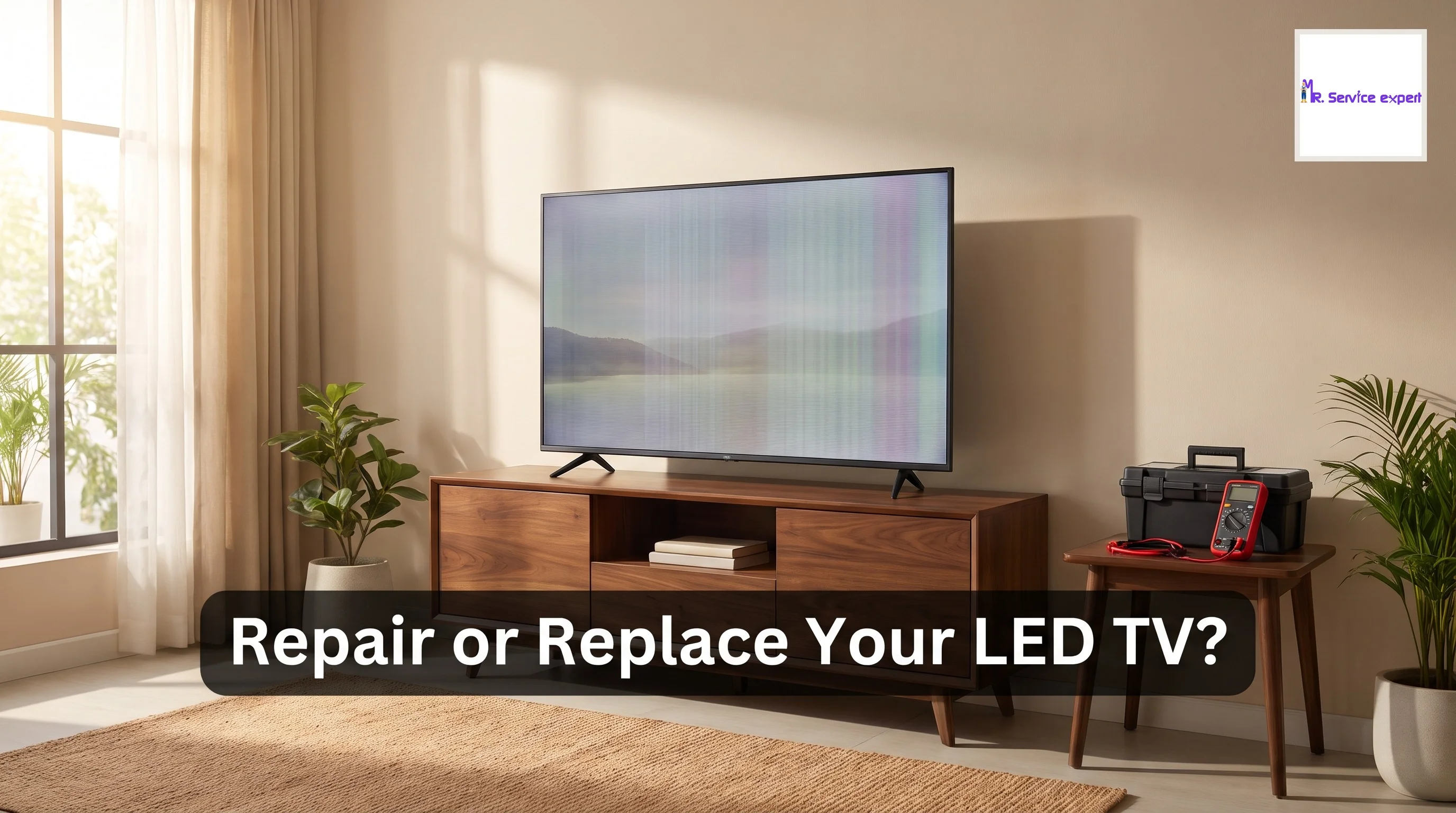
Image quality degradation manifests as color distortion, faded brightness, contrast issues, or the appearance of vertical or horizontal lines across the screen. These LED TV replacement signs often indicate panel deterioration or T-con board failures. The T-con board, which controls the panel's operation, costs between INR 3,000 and INR 12,000 to replace, but combining this repair with other necessary fixes can quickly escalate total costs.
Calculating the True Cost of LED TV Repair
Before deciding on the LED TV repair vs replace question, you must accurately calculate repair costs and compare them against replacement options. In India, repair costs vary significantly based on your television's brand, size, problem severity, and your location. Metropolitan cities typically have more competitive pricing due to higher technician availability, while smaller towns might charge premium rates for specialized repairs.
The general rule followed by LED service professionals suggests that if repair costs exceed 50 percent of the television's current market value, replacement becomes more economical. For example, if your 43-inch LED TV would cost INR 18,000 to repair but similar new models sell for INR 25,000, replacement offers better value. However, this calculation becomes more nuanced when considering additional factors like remaining lifespan and feature improvements in newer models.
Labor charges represent a significant portion of repair costs in India. Professional LED TV Technician services typically charge between INR 500 and INR 2,000 for diagnostic visits, which may or may not be waived if you proceed with repairs. Actual repair labor adds another INR 1,000 to INR 5,000 depending on complexity. Parts costs vary dramatically based on components needed and whether original or compatible parts are used.
Here is a typical breakdown of common LED TV repair costs in India for 2026:
| Repair Type | Estimated Cost Range | Typical Timeline |
|---|---|---|
| Power Supply Board Replacement | INR 2,000 - INR 8,000 | 2-5 days |
| LED Panel Replacement | INR 8,000 - INR 30,000 | 5-10 days |
| T-con Board Replacement | INR 3,000 - INR 12,000 | 3-7 days |
| Backlight Replacement | INR 3,500 - INR 15,000 | 3-8 days |
| Speaker Replacement | INR 1,500 - INR 5,000 | 1-3 days |
| HDMI Port Repair | INR 800 - INR 3,000 | 1-2 days |
| Motherboard Replacement | INR 4,000 - INR 18,000 | 5-12 days |
Transportation costs add another layer to overall expenses. Transporting large LED TVs to service centers and back can cost INR 500 to INR 2,000 depending on size and distance. Some premium LED service providers offer on-site repairs, which command higher labor charges but eliminate transportation risks and costs.
Warranty status dramatically affects repair economics. If your LED TV remains under manufacturer or extended warranty, repairs might be free or heavily subsidized. Always check warranty terms before paying for private repairs, as unauthorized servicing can void remaining warranty coverage. Many Indian consumers overlook this aspect and unnecessarily spend on repairs that would have been covered.
Hidden costs deserve consideration when calculating true repair expenses. Older LED TVs might require multiple repairs over subsequent months, creating a cascading cost scenario. Additionally, repaired televisions may not perform at original specifications, and finding replacement parts for discontinued models becomes increasingly difficult and expensive over time.
Key Signs Your LED TV Can Be Successfully Repaired
Certain LED TV problems respond well to repairs and do not justify immediate replacement. Recognizing these repairable issues helps you avoid unnecessary expenditure on a new television when your current unit has years of life remaining. Understanding which LED TV replacement signs actually indicate repair opportunities rather than replacement necessities saves money while extending your television's useful life.
Minor screen issues like a few isolated dead pixels, temporary image retention, or mild backlight inconsistencies typically do not warrant replacing the entire panel. These cosmetic imperfections might be annoying but do not significantly impact viewing experience. If the number of dead pixels remains below ten and they are not clustered in the center viewing area, most LED TV repair experts recommend living with them rather than incurring repair costs.
Audio problems that stem from external speaker damage or connection issues represent excellent repair candidates. If your LED TV's display functions perfectly and only audio is compromised, speaker replacement offers a cost-effective solution. Many Indian households actually prefer connecting external sound systems anyway, making internal speaker repairs even more questionable for those setups.
Power supply board failures, while frustrating, are among the most straightforward repairs for qualified technicians. If your LED TV exhibits power-related symptoms like not turning on, random shutdowns, or requiring multiple power button presses to activate, the power supply board is likely culpable. This component replacement typically costs much less than buying a new television and restores full functionality.
HDMI port damage affects many LED TVs due to frequent cable connections and disconnections. Broken or loose HDMI ports prevent connecting set-top boxes, gaming consoles, and other devices, but replacing individual ports costs significantly less than LED TV replace options. Technicians can replace damaged ports for INR 800 to INR 3,000, making this repair highly economical.
Software and firmware issues often masquerade as hardware problems but resolve through updates or resets. Smart LED TVs experiencing sluggish performance, app crashes, or connectivity problems frequently need only software refreshes. Before considering repairs or replacement, attempt factory resets and firmware updates, which cost nothing but time.
Repairable televisions typically share these characteristics:
- Age below five years with no previous major repairs
- Single component failure rather than multiple simultaneous issues
- Repair cost below 40 percent of current replacement value
- Availability of genuine or high-quality compatible parts
- Strong original build quality from reputable manufacturers
- No visible physical damage to the screen or chassis
- Problems that appeared suddenly rather than gradually worsening
Televisions meeting these criteria generally justify repair investment. Professional LED service evaluation provides definitive answers about repairability and expected post-repair lifespan. Many service centers offer free diagnostic assessments, allowing you to make informed decisions without upfront costs.
Clear Indicators Your LED TV Needs Replacement
While many problems can be repaired, certain LED TV replacement signs definitively indicate that purchasing a new television makes more financial and practical sense. Recognizing these indicators prevents throwing good money after bad on repairs that merely postpone inevitable replacement.
Severe screen damage represents the clearest replacement indicator. Cracked screens, extensive dead pixel clusters covering significant viewing areas, or complete panel failures typically exceed 60-70 percent of replacement costs to repair. LED panels constitute the most expensive television component, and for models over three years old, panel replacement costs often approach or exceed purchasing new units with superior specifications.
Multiple simultaneous component failures suggest systemic degradation rather than isolated problems. When your LED TV experiences power issues, display problems, and audio malfunctions concurrently, the cumulative repair costs quickly become prohibitive. This scenario commonly affects televisions beyond their expected seven to ten-year lifespan, indicating natural end-of-life rather than repairable failures.
Obsolete technology and missing modern features increasingly justify replacement even when older TVs function adequately. LED televisions manufactured before 2020 lack support for current streaming services, HDR content, and advanced connectivity standards. If your television cannot access popular apps like Netflix, Amazon Prime, Disney+ Hotstar in their latest formats, or support 4K content becoming standard in Indian broadcasting, replacement delivers significantly enhanced viewing experiences.
Here are key feature comparisons between older and current LED TVs:
| Feature Category | Pre-2020 Models | 2026 Models |
|---|---|---|
| Resolution Standard | 1080p (Full HD) | 4K/8K (Ultra HD) |
| Smart Capabilities | Limited/Outdated OS | Advanced OS with Latest Apps |
| HDR Support | None/Basic HDR10 | HDR10+, Dolby Vision |
| Refresh Rate | 60Hz Standard | 120Hz+ for Gaming |
| HDMI Version | HDMI 1.4/2.0 | HDMI 2.1 |
| Voice Control | Rarely Available | Standard with Alexa/Google |
| Gaming Features | Basic | VRR, ALLM, Low Latency |
| Energy Efficiency | Higher Consumption | 30-40% More Efficient |
Irreparable physical damage beyond screen cracks includes damaged internal circuitry from electrical surges, water damage, or physical impacts. While LED service technicians can assess damage extent, extensive internal damage rarely justifies repair costs. Insurance claims might cover replacements in such scenarios, making new purchases more viable.
Prohibitively expensive repairs represent another clear replacement sign. When repair quotes exceed 50-60 percent of comparable new television prices, replacement provides better value. In 2026, excellent 43-inch LED TVs sell for INR 20,000 to INR 30,000, making any repair exceeding INR 12,000 to INR 15,000 questionable. For larger screens, adjust these thresholds proportionally.
Frequent repeated failures indicate fundamental reliability problems. If your LED TV requires repairs every few months despite professional servicing, it has reached the point where continued investment makes no sense. The inconvenience, downtime, and cumulative costs of repeated repairs far exceed replacement expenses.
Age serves as an important replacement consideration. LED televisions typically last seven to ten years with proper care. Units beyond this age range, even if currently functional, face increasing failure risks and mounting repair costs. Additionally, technological advances make ten-year-old televisions obsolete regardless of functionality, offering substantially inferior viewing experiences compared to budget current models.
Making the Final Decision: A Practical Framework
Determining whether to repair or replace your LED TV requires systematically evaluating multiple factors rather than relying on single criteria. This practical framework guides you through the decision-making process, ensuring you consider all relevant aspects before committing to either option.
Begin by accurately assessing your television's age and original quality. High-end models from reputable manufacturers justify more aggressive repair investments than budget models. A five-year-old premium television that originally cost INR 80,000 warrants different treatment than a similarly aged budget model that cost INR 18,000. Quality televisions often remain technologically relevant longer and support repairs better than cheaper alternatives.
Calculate the repair-to-replacement ratio by dividing quoted repair costs by the price of comparable new models. If this ratio exceeds 0.5 (meaning repairs cost more than half of replacement), strongly consider replacement. However, adjust this threshold based on your television's age and your budget constraints. Sometimes accepting a 0.6 ratio makes sense for barely out-of-warranty models, while 0.4 seems excessive for five-year-old units.
Evaluate your feature requirements and current satisfaction levels. If your existing television meets your needs and you are satisfied with its performance aside from the current problem, repair makes sense within reasonable cost parameters. Conversely, if you have been wanting better resolution, smart features, or improved picture quality, use the malfunction as an opportunity to upgrade rather than repair.
Consider your financial situation and near-term plans. If you are saving for other major expenses or planning to relocate soon, temporary repairs might serve better than immediate replacement. However, if you have budget flexibility and plan to stay in your current home for years, investing in a quality replacement television provides better long-term value and viewing satisfaction.
When evaluating your options, always obtain multiple repair quotes from authorized service centers and independent technicians. Price variations can be substantial, and comparing quotes ensures you understand the actual market rate for necessary repairs. Additionally, inquire about warranty coverage on repair work, as reputable service providers typically offer 30 to 90-day guarantees on parts and labor.