
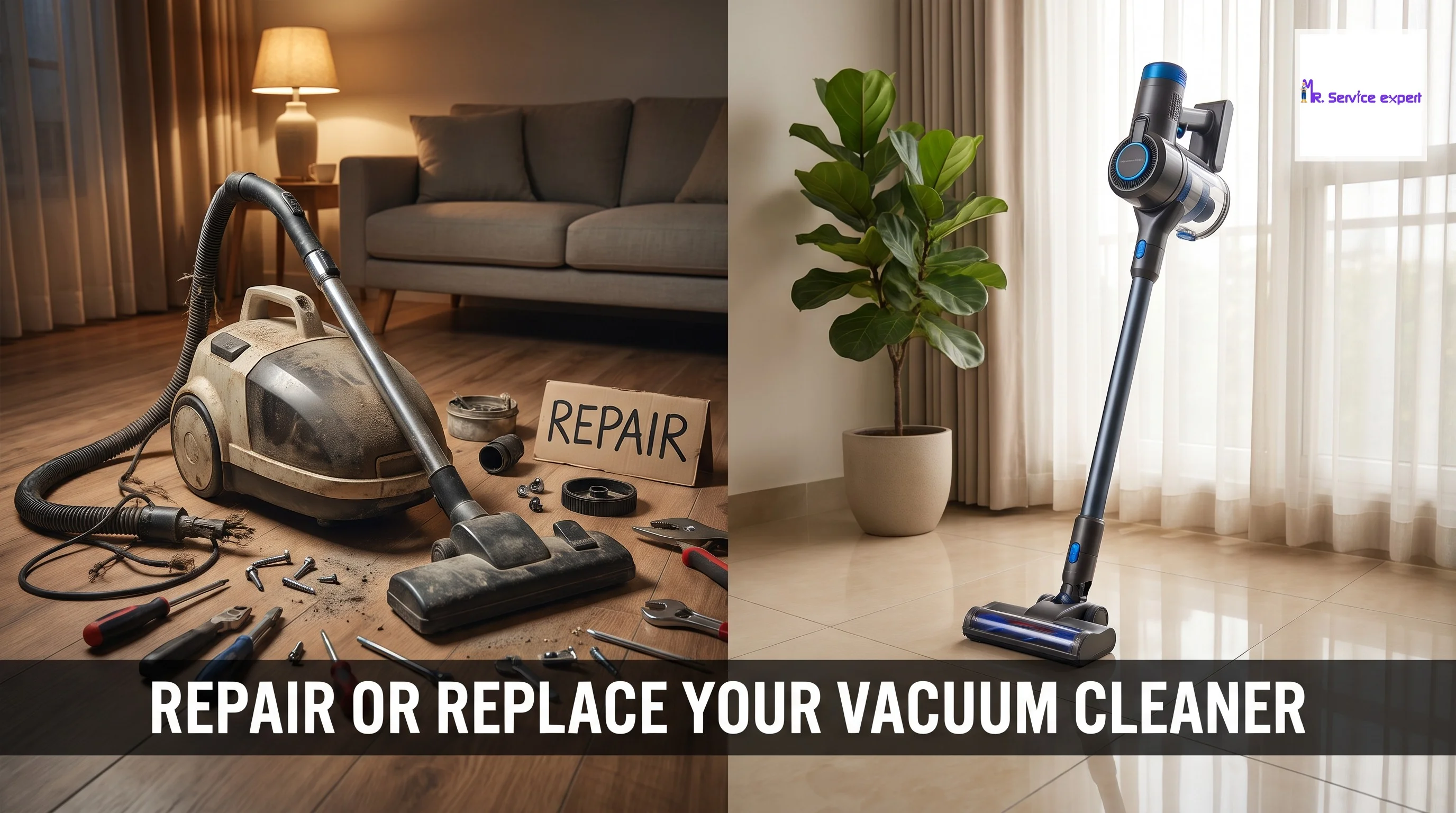
Signs Your Vacuum Cleaner Needs Repair vs Replacement
Your trusty vacuum cleaner has been your cleaning companion for years, faithfully sucking up dust, pet hair, and debris from every corner of your home. But lately, something feels off. Maybe the suction power has decreased, or strange noises have started emanating from the motor. You're standing at a crossroads, wondering whether to invest in repairs or bite the bullet and purchase a new one. Understanding the vacuum cleaner replacement signs and knowing when to opt for vacuum cleaner repair vs replace decisions can save you significant money and hassle in the long run.
Making this choice isn't always straightforward, especially in the Indian market where appliance costs vary dramatically and repair services are widely available at competitive prices. A vacuum cleaner that cost you between ?5,000 to ?50,000 deserves careful consideration before declaring it beyond salvation. The decision impacts not just your wallet but also your cleaning efficiency and home hygiene. Many homeowners rush into replacements when simple repairs could extend their appliance's life by several years, while others continue nursing barely functional machines that waste electricity and time.
The vacuum cleaner industry in India has evolved tremendously over the past decade. From basic upright models to sophisticated robotic cleaners, the options are endless. This abundance makes the repair versus replacement dilemma even more complex. Should you repair your five-year-old canister vacuum or upgrade to a bagless cyclonic model? Is that grinding noise fixable, or does it signal imminent motor failure? These questions plague homeowners across Mumbai, Delhi, Bangalore, and every city in between.
This comprehensive guide will walk you through the critical vacuum cleaner replacement signs that indicate your appliance's end is near. We'll explore cost considerations, performance indicators, and safety concerns that should influence your decision. Whether you're dealing with a budget-friendly stick vacuum or a premium HEPA-filtered model, you'll gain the insights needed to make an informed choice. We'll also discuss when professional Vacuum cleaner Repair service makes financial sense and when they're simply delaying the inevitable.
By the end of this article, you'll possess a clear framework for evaluating your vacuum cleaner's condition, understanding repair costs versus replacement benefits, and making a decision that aligns with both your budget and cleaning needs. Let's dive into the telltale signs that will guide your vacuum cleaner repair vs replace decision with confidence.
Understanding the Lifespan of Vacuum Cleaners
The typical vacuum cleaner in Indian households serves faithfully for approximately six to ten years, though this varies significantly based on usage frequency, maintenance practices, and build quality. Budget models in the ?3,000 to ?8,000 range generally last four to six years with regular use, while premium models priced above ?20,000 can easily cross the ten-year mark when properly maintained. Understanding where your appliance falls within this spectrum is the first step in making an informed repair or replacement decision.
Usage patterns dramatically affect longevity. A vacuum used daily in a large household with pets will naturally wear faster than one used weekly in a small apartment. Indian homes face unique challenges including marble dust, construction debris in rapidly developing neighborhoods, and the fine particulate matter that characterizes our urban environments. These factors can accelerate wear on filters, motors, and hoses compared to international usage scenarios.
Manufacturing quality plays an equally important role. Domestic brands have improved significantly but still sometimes lag behind international manufacturers in motor durability and component quality. However, they often offer better service networks and more affordable spare parts. When evaluating vacuum cleaner replacement signs, consider your model's original price point and brand reputation as indicators of expected lifespan.
Regular Vacuum cleaner maintenance tips implementation can extend appliance life by thirty to fifty percent. Simple practices like emptying dust bags or canisters after each use, cleaning filters monthly, and checking for blockages prevent most common failures. Neglected vacuums rarely reach their potential lifespan, making premature replacement seem necessary when proper care could have avoided the situation entirely.
Critical Performance Indicators: When Repair Makes Sense
Suction power loss represents the most common complaint about aging vacuum cleaners, but it doesn't always signal the need for replacement. Gradual suction reduction over months or years often indicates clogged filters, blocked hoses, or full dust containers rather than motor failure. Before considering replacement, thoroughly clean all filters, inspect hoses for blockages, and ensure proper assembly. Professional vacuum cleaner repair services can diagnose whether suction issues stem from fixable problems or indicate fundamental motor degradation.
Strange noises deserve immediate attention but don't necessarily mean replacement. A high-pitched whining might indicate bearing wear, while rattling could suggest loose components or foreign objects in the brush roll. Grinding sounds, however, typically signal serious motor problems that may exceed repair cost-effectiveness. When unusual sounds appear, scheduling vacuum cleaner service quickly can prevent minor issues from escalating into complete failure. The cost of bearing replacement or component tightening typically ranges from ?500 to ?2,000, far less than a new appliance.
Electrical issues like frequent tripping of circuit breakers or intermittent power losses often result from damaged cords, faulty switches, or motor brush wear. These repairs generally fall within the ?800 to ?3,000 range depending on parts availability and labor charges in your area. However, if your vacuum experiences repeated electrical problems after repairs, underlying motor deterioration may make replacement the wiser choice. Electrical fires, though rare, pose serious risks, making professional assessment essential.
Brush roll problems manifest as reduced cleaning effectiveness on carpets despite adequate suction. Belt replacement costs between ?200 and ?800 and solves most brush roll issues. If the brush roll motor itself fails, repair costs climb to ?2,500 to ?5,000. For vacuums valued under ?10,000, this repair expense approaches replacement cost, tipping the scales toward purchasing new equipment.
Calculating the Cost-Benefit Analysis
The fundamental rule for vacuum cleaner repair vs replace decisions involves comparing repair costs to replacement value. If repair expenses exceed fifty percent of a new equivalent model's price, replacement typically makes better financial sense. For example, if your vacuum originally cost ?15,000 and now requires ?8,000 in motor repairs, investing that amount toward a new ?18,000 model with modern features and full warranty provides better value.
Age factors heavily into this calculation. A three-year-old vacuum worth ?25,000 might justify a ?6,000 repair since it likely has several good years remaining. The same repair on a nine-year-old model becomes questionable as other components may soon fail. Consider the appliance's overall condition, not just the immediate problem. Multiple worn parts suggest systemic aging that repairs cannot fully address.
Warranty coverage changes the equation entirely. If your vacuum falls within warranty period, manufacturer repairs or replacements cost nothing or minimal amounts. Extended warranties common with premium models can cover repairs for up to five years. Always verify warranty status before paying for vacuum cleaner repair services. Some credit cards also offer purchase protection that extends manufacturer warranties.
Energy efficiency improvements in newer models present hidden savings that offset replacement costs over time. Vacuum cleaners manufactured in the past three years typically consume twenty to thirty percent less electricity than models from eight to ten years ago. For households vacuuming daily, annual electricity savings of ?800 to ?1,500 accumulate significantly over a new vacuum's lifespan, effectively subsidizing the upgrade cost.
Vacuum Cleaner Replacement Signs You Cannot Ignore
Persistent burning smells indicate serious motor overheating or electrical insulation breakdown. While sometimes caused by belt friction or debris in the motor housing, recurring burning odors after cleaning suggest motor deterioration that cannot be economically repaired. Continuing to use a vacuum emitting burning smells risks fire hazards and should prompt immediate discontinuation and replacement consideration.
Visible cracks in the body or hose, especially around high-stress areas like hose connections and wheels, compromise suction efficiency and durability. Plastic degradation from age and UV exposure makes repairs temporary at best. Replacement hoses cost ?1,200 to ?3,500, but if the main body shows widespread cracking, these repairs simply postpone inevitable replacement. Structural integrity issues rarely justify continued investment in an aging appliance.
Complete motor failure, characterized by total power loss despite confirmed electrical supply, typically requires motor replacement costing ?4,000 to ?12,000 depending on the vacuum type. For most consumer-grade vacuums under ?20,000, this expense approaches or exceeds replacement cost. Commercial-grade or premium residential models might justify motor replacement given their higher initial investment and superior build quality elsewhere in the unit.
Repeated failures of the same component suggest underlying issues that repairs cannot fully resolve. If you've replaced the motor brushes twice within a year or the power switch has failed three times, systematic problems exist. Continuing repairs becomes a pattern of throwing good money after bad. These situations clearly favor replacement with a more reliable model.
Filter deterioration beyond cleaning capability represents another replacement sign. HEPA filters and other advanced filtration systems degrade over time, losing effectiveness even when visually clean. If replacement filters cost ?2,000 to ?4,000 and your vacuum is already seven years old with reduced performance, investing in a new model with fresh filtration makes more sense than extending an aging machine's life marginally.
Modern Features Worth Upgrading For
Technology advancements in vacuum cleaners over the past five years have been substantial. If your current vacuum predates 2021, newer models offer significant improvements worth considering. Cyclonic technology eliminates the need for bags, reducing ongoing costs and improving suction consistency. HEPA filtration captures 99.97 percent of particles, crucial for Indian homes dealing with high pollution levels and allergens.
Cordless convenience has revolutionized cleaning efficiency, and battery technology improvements now deliver forty to sixty minutes of runtime on single charges. For apartments and smaller homes, cordless models eliminate the hassle of changing outlets and managing cords. While initially more expensive (?15,000 to ?40,000), the time savings and convenience often justify the investment if your current corded vacuum needs major repairs.
Smart features including app connectivity, automatic dirt detection, and robotic navigation represent the cutting edge. Robotic vacuums, now available from ?8,000 to ?80,000, handle daily maintenance cleaning autonomously. If mobility issues make vacuuming difficult or your schedule allows little time for housework, upgrading to robotic technology when your traditional vacuum fails makes practical sense.
Improved dust capacity and easier emptying mechanisms in modern models enhance user experience significantly. Bagless canisters with one-touch emptying reduce exposure to dust and allergens compared to older bag or basic canister designs. For allergy sufferers or households with respiratory sensitivities, this improvement alone might justify upgrading a functioning but outdated vacuum.
When Repair Is the Smart Choice
Recent purchases with minor issues should always undergo repair attempts first. Vacuums under three years old rarely suffer fundamental design failures, and most problems stem from user error, minor part failures, or manufacturing defects covered by warranty. Professional vacuum cleaner repair assessment can identify simple fixes that restore full functionality at minimal cost.
High-end models justify more extensive repairs due to superior construction and component quality. A premium vacuum costing ?40,000 or more likely uses industrial-grade motors, metal components, and repairable construction compared to budget models with sealed, disposable parts. The same ?8,000 repair that seems excessive for a ?12,000 vacuum makes perfect sense for a ?45,000 model with years of reliable service remaining.
Sentimental value occasionally overrides pure economics. While rarely the most cost-effective choice, some homeowners prefer repairing beloved appliances that have served faithfully for years. If you're emotionally attached to your vacuum and repair costs seem reasonable, there's nothing wrong with choosing repair despite marginal economics. Just recognize you're making a heart decision rather than a purely financial one.
Environmental considerations favor repair when feasible. Electronic waste represents a growing problem, and extending appliance life through repairs reduces environmental impact. If you prioritize sustainability and repair costs fall within reasonable bounds, choosing vacuum cleaner service over replacement aligns with eco-conscious values. Many cities now have responsible disposal requirements for electronic appliances, adding complexity to replacement decisions.
Parts availability strongly influences repair viability. Older models or discontinued brands may lack accessible spare parts, making repairs impossible regardless of willingness to pay. Before committing to repair, verify parts availability with authorized service centers. Generic parts sometimes work but may void any remaining warranty or compromise performance and safety.
Comprehensive Comparison: Repair vs Replace
| Factor | Repair | Replace |
|---|---|---|
| Cost (immediate) | ?500 - ?12,000 | ?5,000 - ?50,000 |
| Warranty coverage | None (unless under warranty) | 1-5 years full coverage |
| Energy efficiency | Same as original | 20-30% better than old models |
| Features | Original only | Latest technology |
| Expected lifespan | 1-3 additional years | 6-10 years |
| Downtime | 3-7 days typically | Immediate replacement |
| Environmental impact | Lower (extends life) | Higher (disposal required) |
| Performance | May not reach original | Factory-fresh performance |
Warning Signs That Demand Immediate Action
Safety issues should override all cost considerations in vacuum cleaner repair vs replace decisions. Exposed wiring, sparking during operation, or smoking requires immediate discontinuation. These conditions pose electrocution and fire risks that no amount of money saved justifies. Replace dangerous vacuums immediately regardless of age or repair costs.
Water damage from flooding or major spills usually causes irreparable harm to motors and electrical components. Even if the vacuum operates after drying, corrosion and short circuits may develop over time. The ?15,000 to ?25,000 range vacuum exposed to significant water infiltration should be replaced rather than risking future failure or safety issues.
Pest infestation within the vacuum creates health hazards and indicates the appliance has been stored improperly or unused for extended periods. While theoretically cleanable, the effort and potential contamination make replacement the safer choice. Cockroaches, in particular, leave residue and eggs that persist despite cleaning efforts.
Multiple simultaneous failures suggest systemic breakdown. When motor issues coincide with hose cracks and electrical problems, your vacuum has reached end-of-life. Addressing each problem individually might cost more than replacement while still leaving an fundamentally compromised appliance. Recognize when your vacuum is telling you it's time to retire.
Making Your Final Decision
Start with honest assessment of your current vacuum's age, original cost, and overall condition. Calculate total invested amount including previous repairs. If you've already spent ?4,000 on repairs over the past year and now face another ?3,000 expense, that ?7,000 total likely exceeds wise investment in an aging appliance.
Get multiple repair estimates from qualified vacuum cleaner repair professionals. Prices vary significantly between service providers, and some may identify simpler solutions than others. Authorized service centers charge premium rates but guarantee genuine parts and qualified technicians. Local repair shops may offer lower prices with variable quality.
Research current replacement options in your price range before committing to expensive repairs. You might discover that technological improvements and competitive pricing make replacement more attractive than initially assumed. Read reviews, compare specifications, and identify models that address any shortcomings in your current vacuum.
Consider future needs and household changes. If you're planning to adopt pets, move to a larger home, or address specific cleaning challenges, these factors might favor replacement with a model better suited to upcoming requirements rather than repairing equipment that won't meet evolving needs.
Is your vacuum losing suction, making strange sounds, or leaving debris behind? Learn more about the telltale signs that indicate whether your vacuum needs a simple repair or complete replacement. Discover how to evaluate motor performance, assess damage severity, and understand when repair costs outweigh replacement benefits for informed decisions.